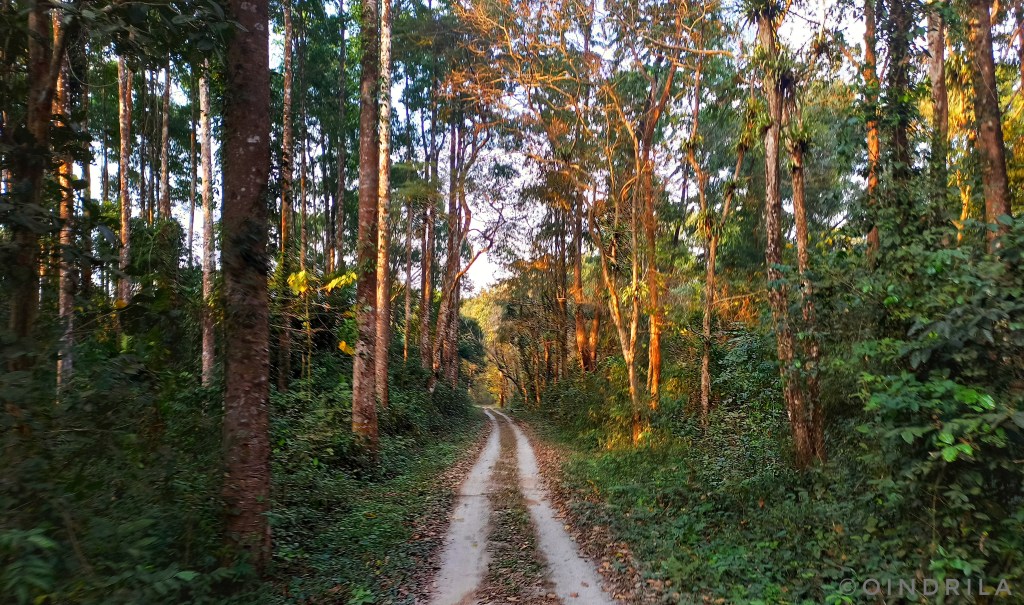
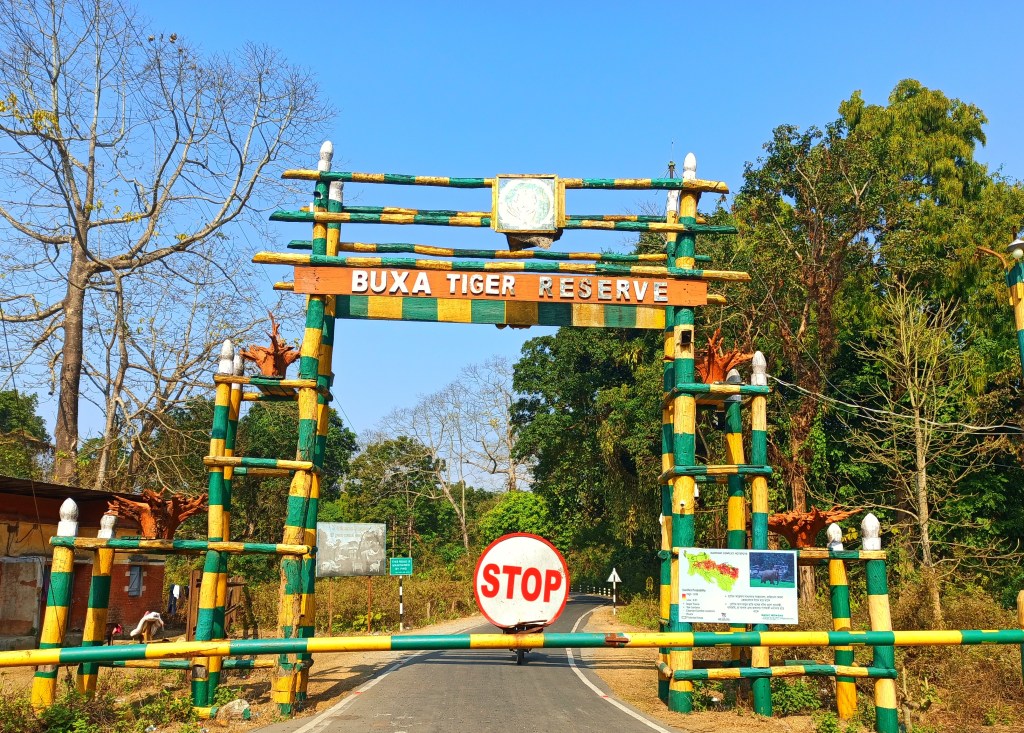
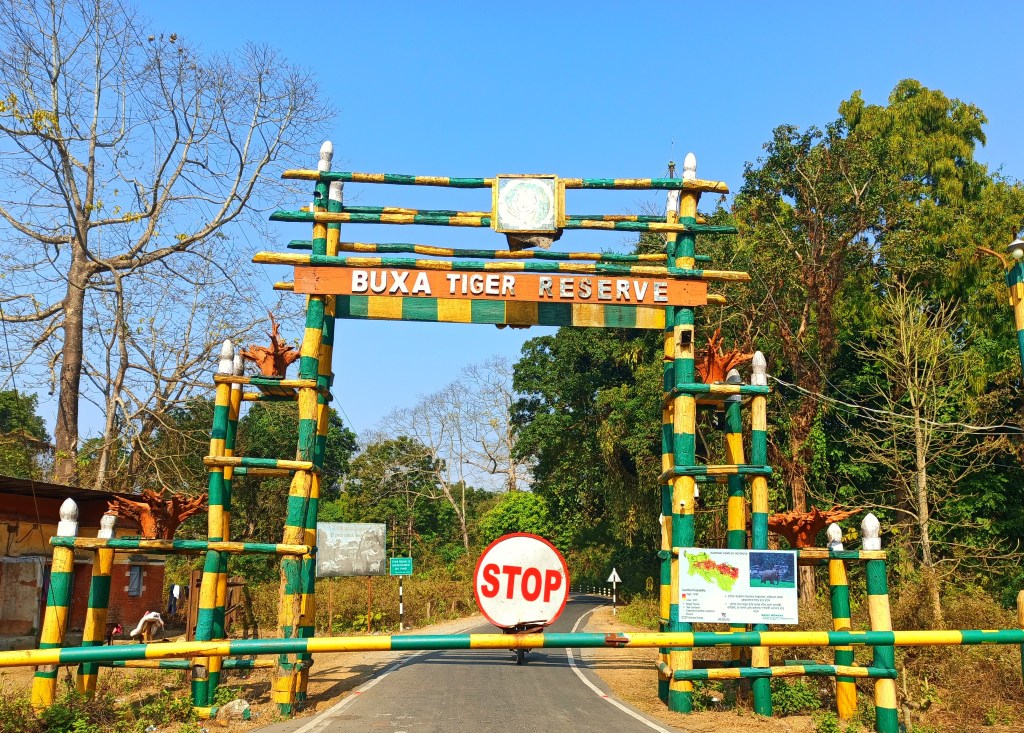
From Buxa Tiger Reserve check point we took a gypsy along with a guide for our jungle safari. This involved almost 20 kms of Jeep Safari through the jungle roots. Safari is done twice in a day… 1st from 6 to 11 a.m and 2nd from 2 to 6 p.m.
On the whole way of our journey we didn’t get to see any animal. But one of the best part throughout the journey was the sound of nature.
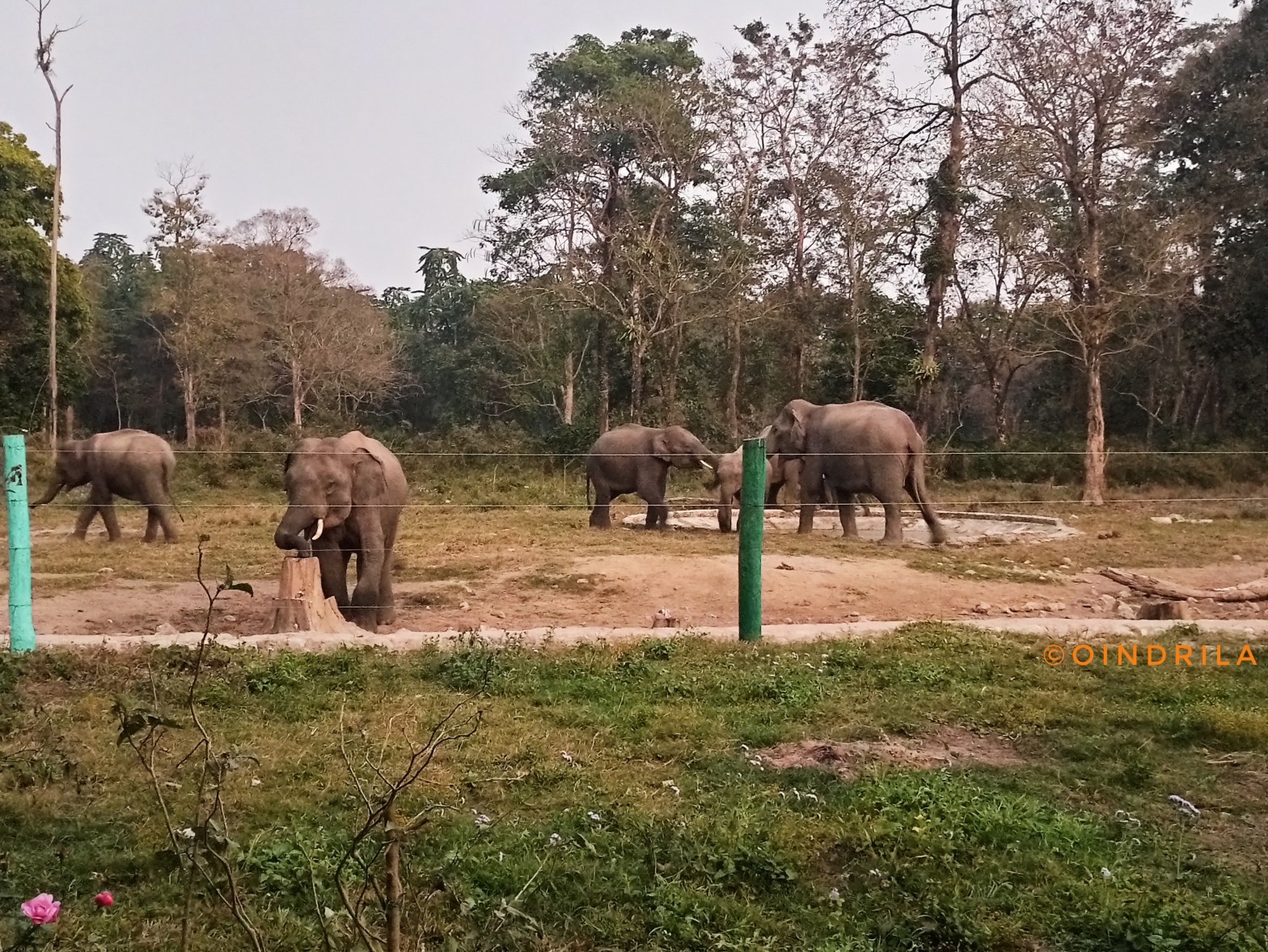
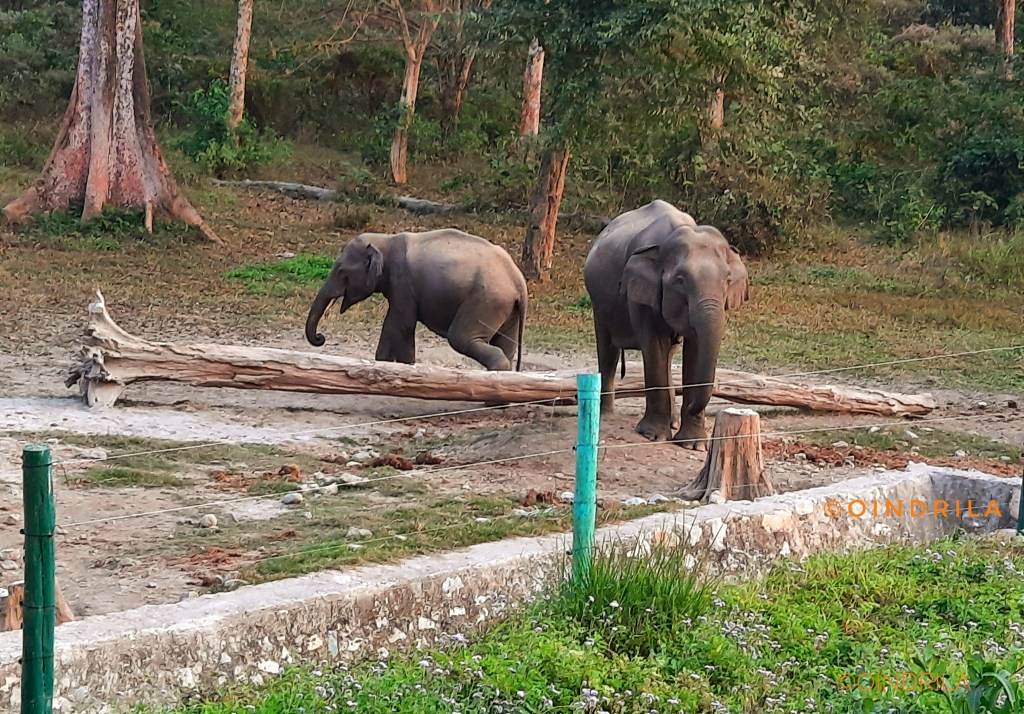
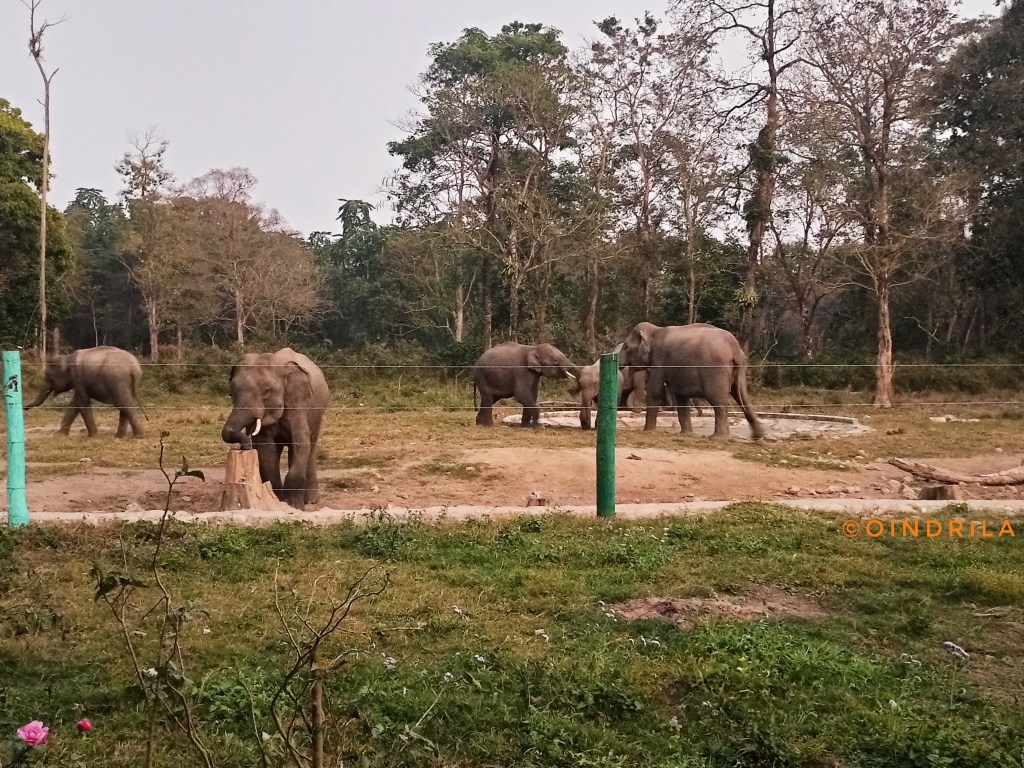
We reached 25th mile watch tower, also known as Hati (elephant) tower, almost at 4 p.m. And here the actual surprise was waiting for us. Within one hour a herd of 8 elephants came there. Earlier the forest guard had spread salt near the water body, mentioning that this attracts elephants.
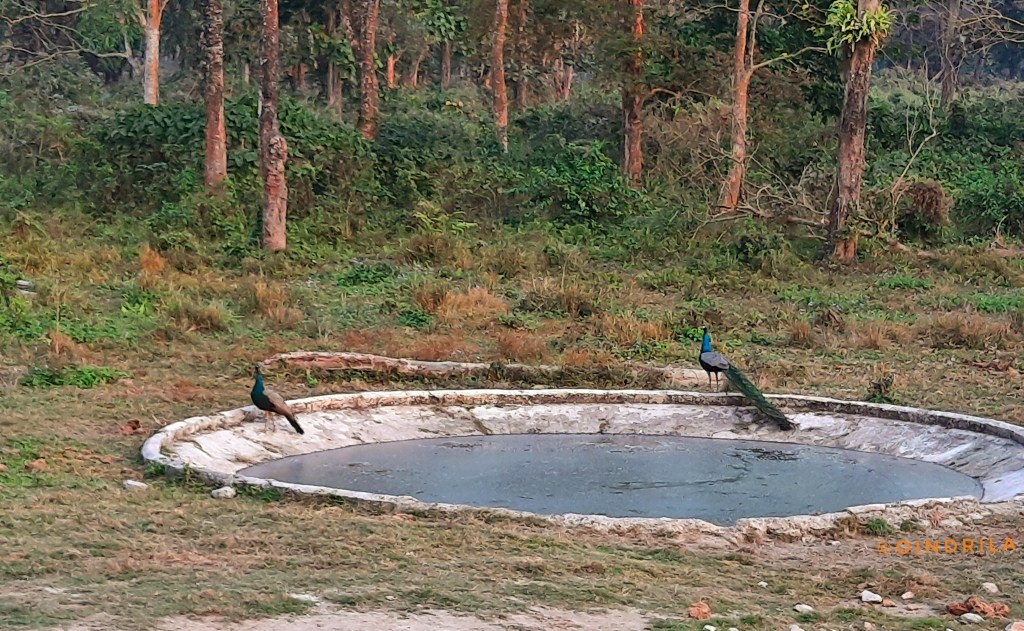
We were so surprised to see this kind of fondness for salt among elephants. Besides, we got to see a peacock couple… flying from branches to branches.
When the sun started to set down, we too got back to our jeep. Throughout the way of our return journey we were amused by the feel of night safari amidst the darkness of the jungle.
Near about 6.30 p.m. we came back to our Bolero. There we had some tiffin and then started for home.
Jayanti is a small forest village within Buxa Tiger Reserve in Alipurduar district of West Bengal, India. It is located along the Jayanti River, forming a natural border with the Bhutan hills. It is popular with hikers for its beautiful views of the surrounding landscape and wild fountains.
After a continuous work pressure of 4 long months I finally managed to go for a short one-day trek to Jayanti Chhota Mahakal. Though I have previously visited Buxa-Jayanti, but can’t ever ignore the attraction of long drive (or ride) through the roads towards Jayanti. On 26th Jan, 2020 we started our journey from Jalpaiguri at 8 a.m. We were a group of 6 friends. We hired a Bolero for the whole day from our home town.
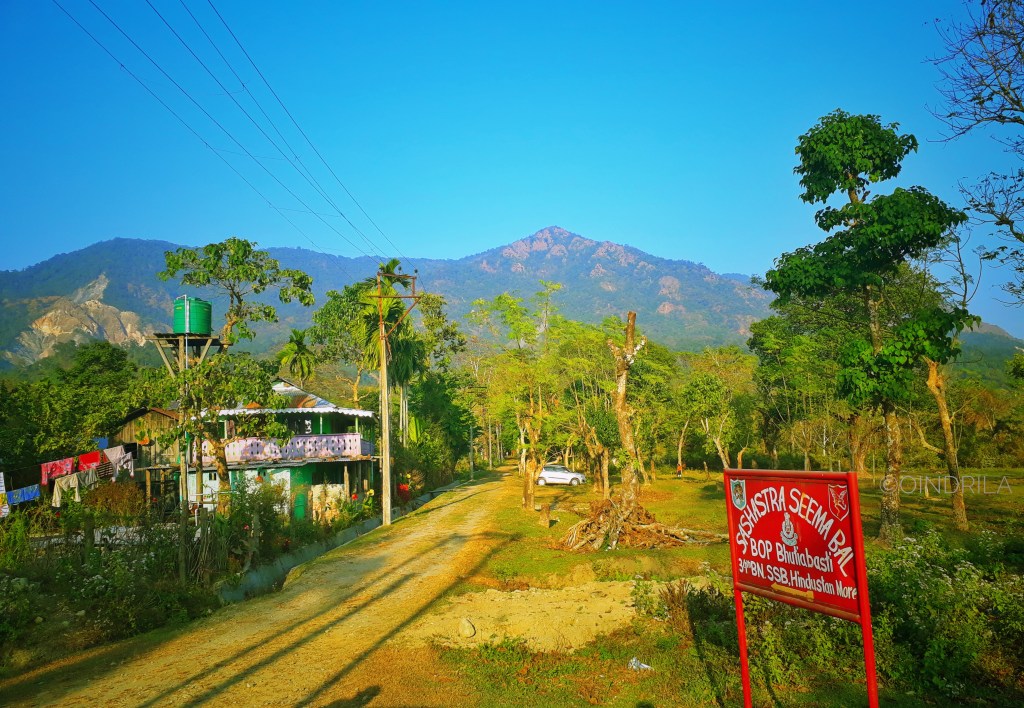
For Buxa trek to avoid a hectic schedule it’s better to stay in Alipurduar one night before. But we were so enthusiasts that we decided to start on that same day. We did our breakfast in a hotel at Hasimara near about 10.30 a.m. At 12 o’clock we reached Rajabhatkhawa Check Point. There we took permit after paying vehicle charge and tourist charge.
From here the road is divided in two ways after a drive of 11 kms towards Buxa More… the left one goes to Lepchakha via Buxa Fort and the right one leads towards Jayanti.
As I have previously visited Buxa Fort, so this time we chose Jayanti. At about 12.30 p.m we reached at Jayanti Check Point. From here you have to take a gypsy along with a guide to accomplish any treks like… Big Mahakal, Small Mahakal, Pukhri, Bhutia Basty, Chunia Basty etc.
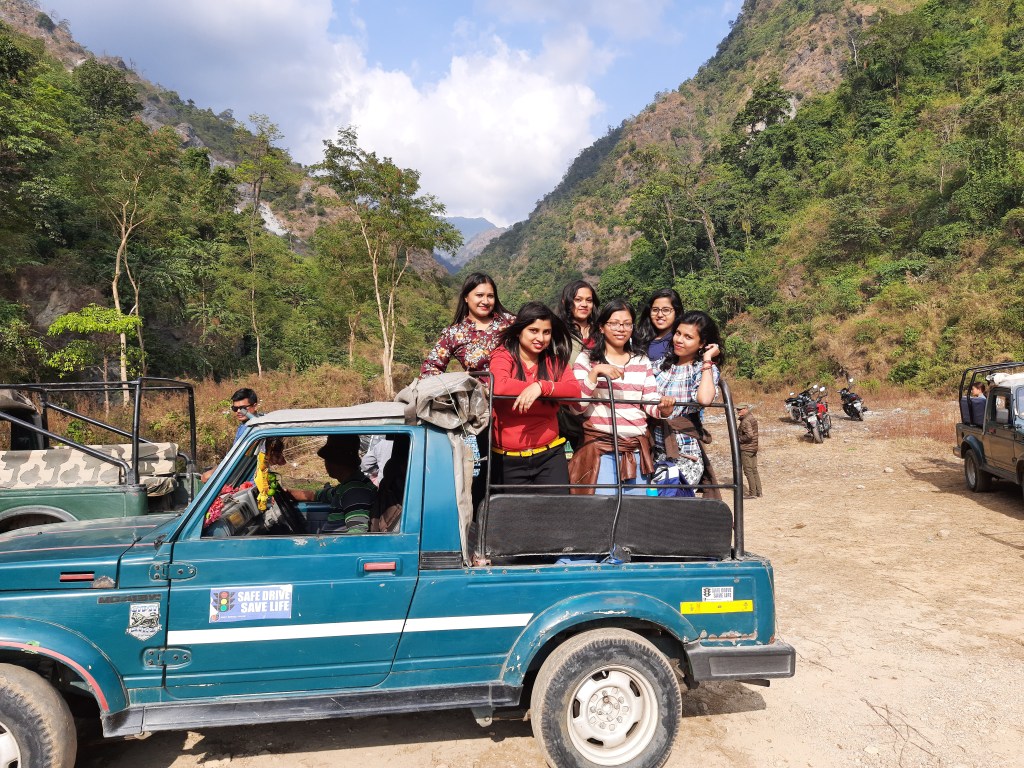
A gypsy carries at most 6 people except the driver and the guide. Jeet bro was our guide for Chhota Mahakal Trek.
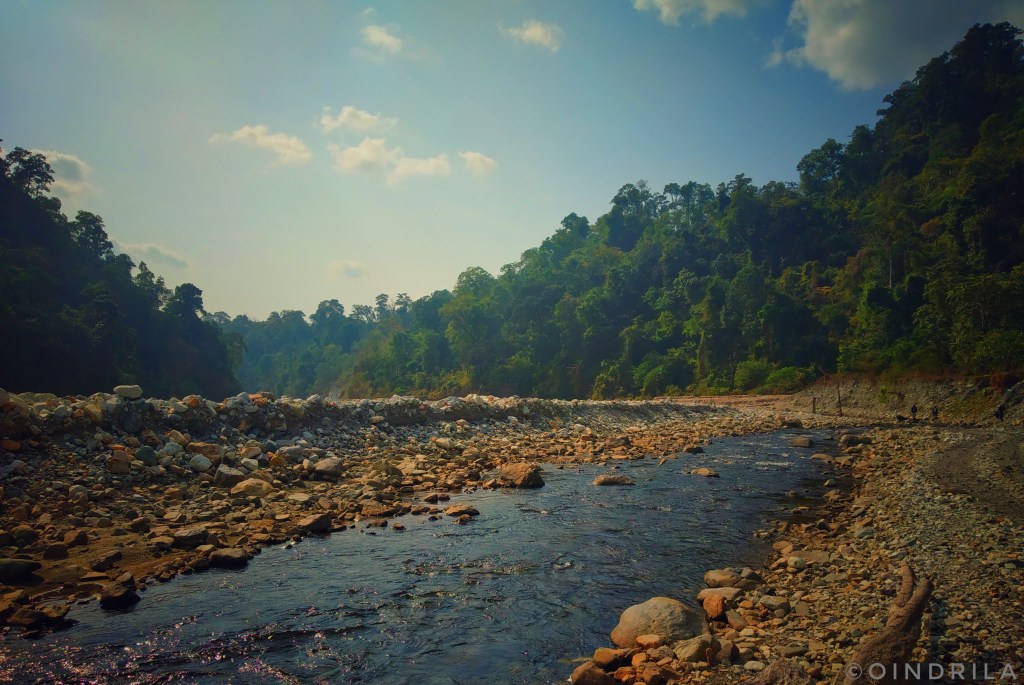
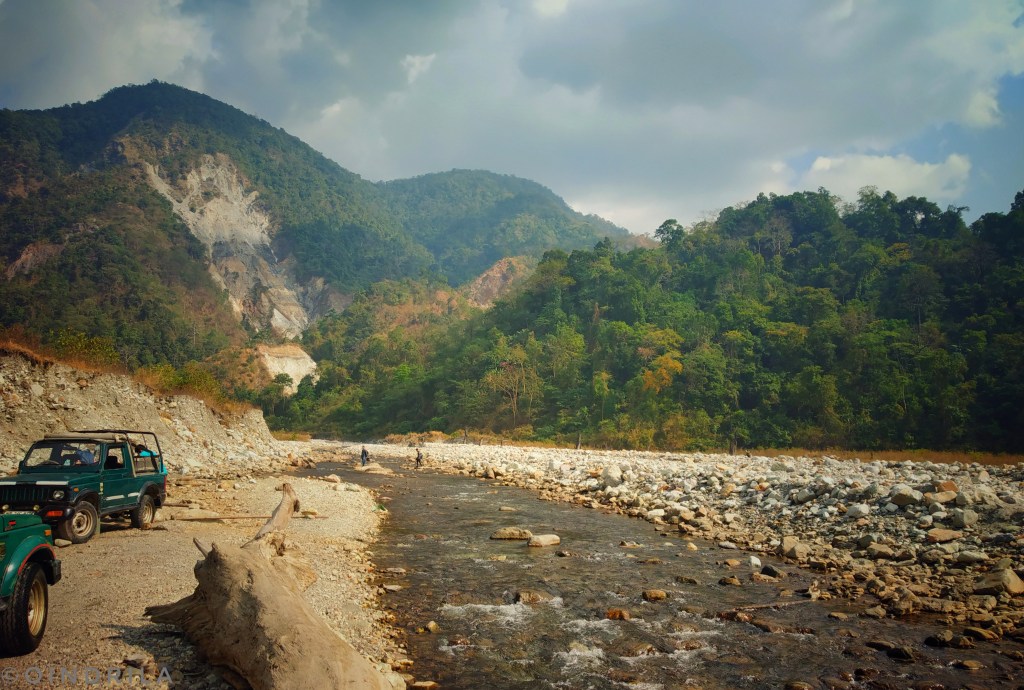
Jayanti River flows just beside the check point. As the gypsy goes through the stony rugged dry river basin to reach Mahakal, it’s not possible to do Mahakal Trek in rainy season.
Due to the rough river basin though it was not easy to sit calmly through out the journey, our adventure-prone mind insisted us to keep standing the whole way… with holding the rods of the gypsy-hood tightly.
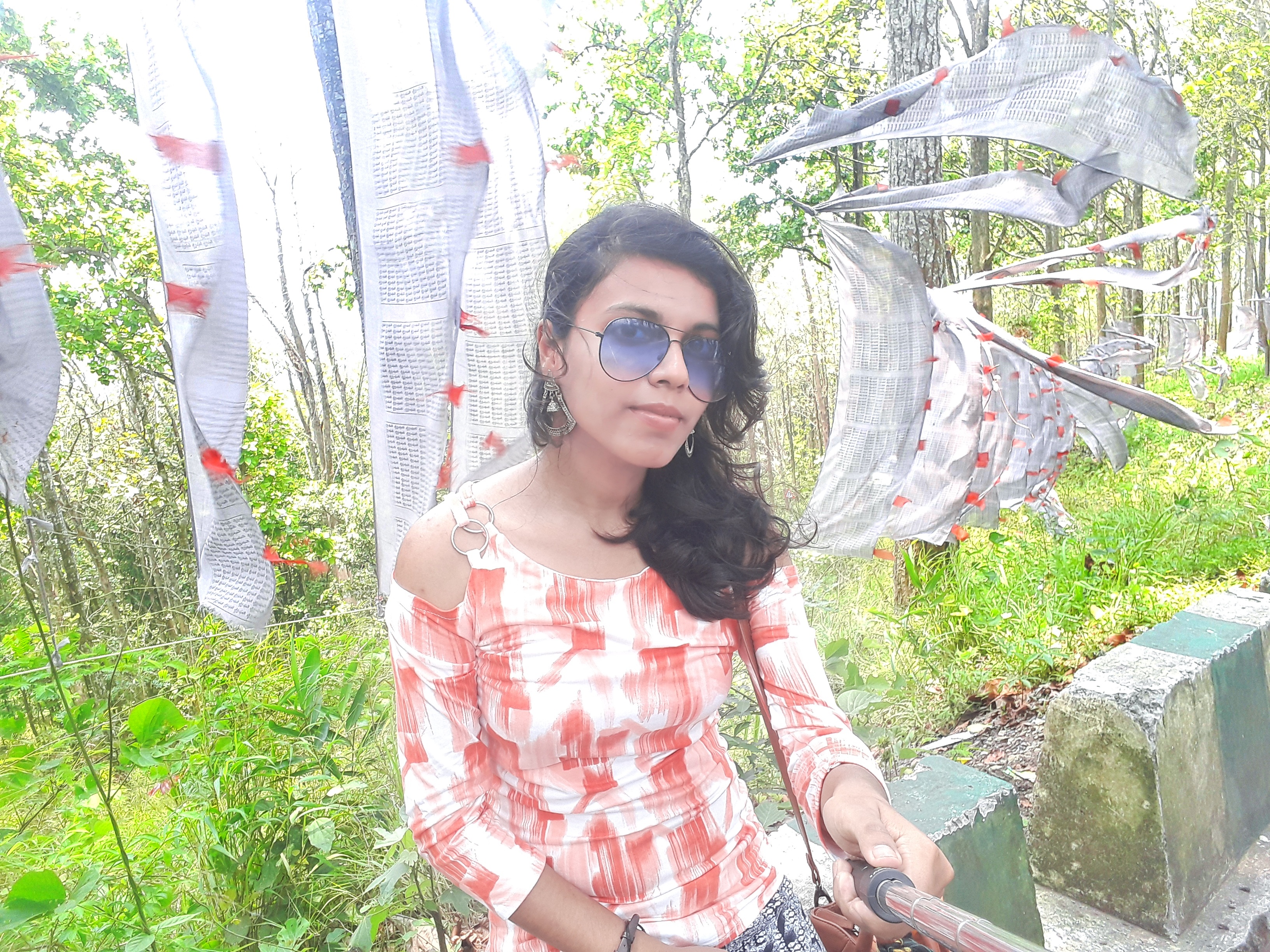
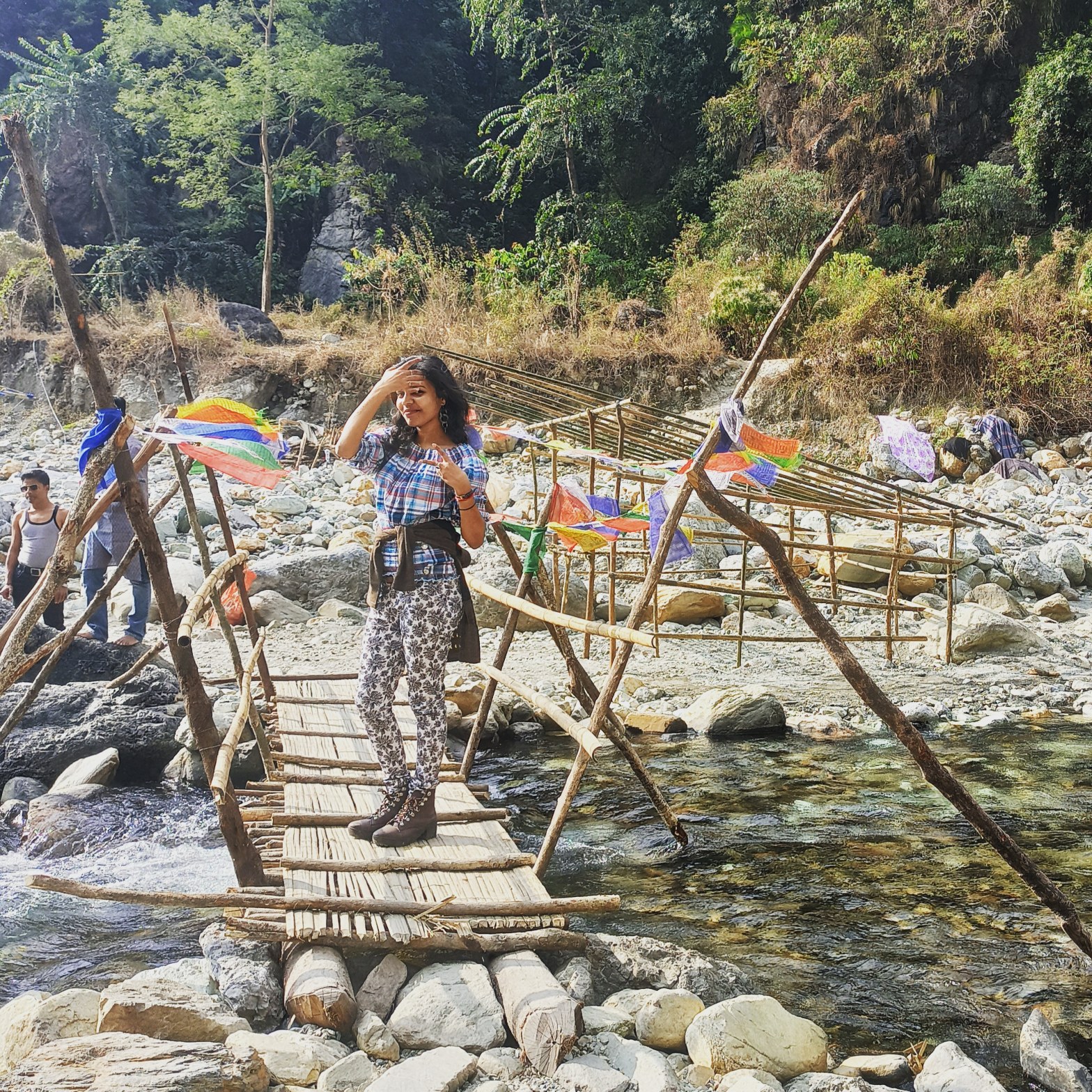
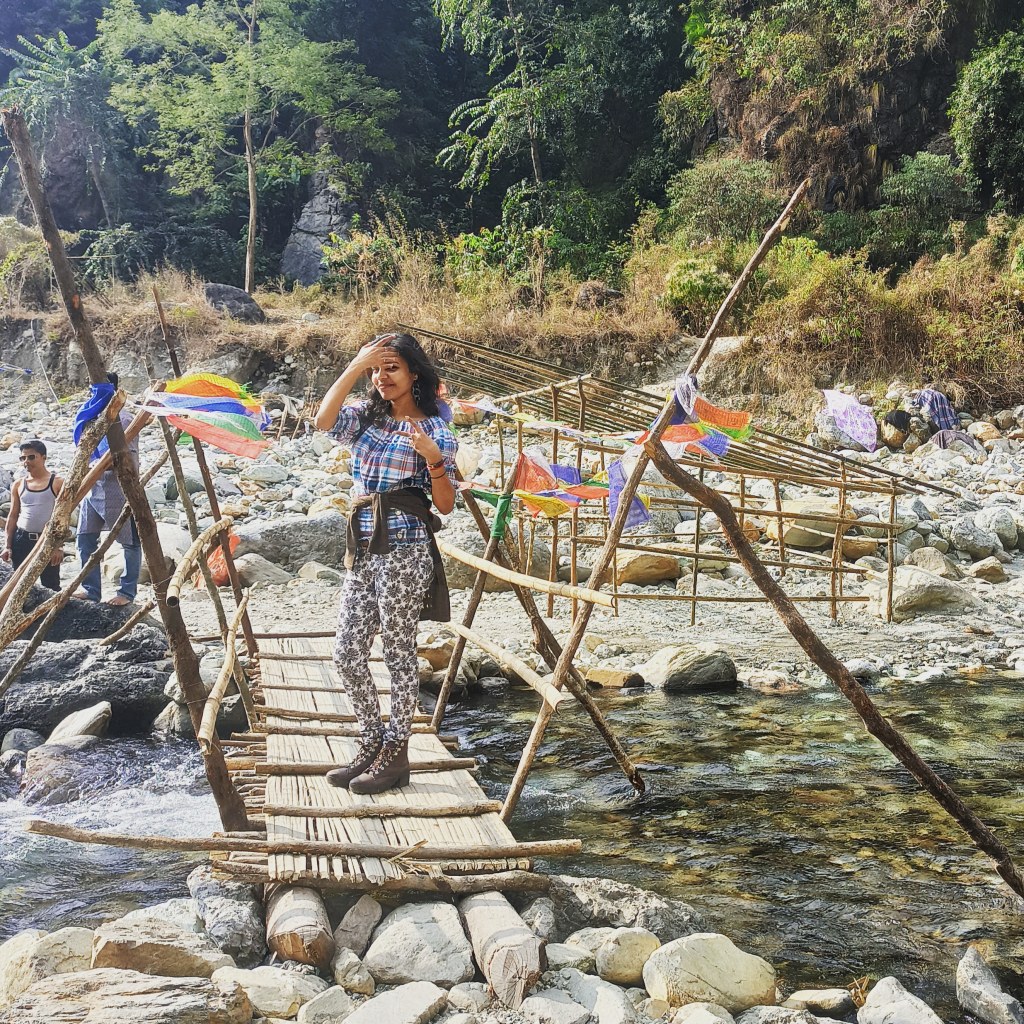
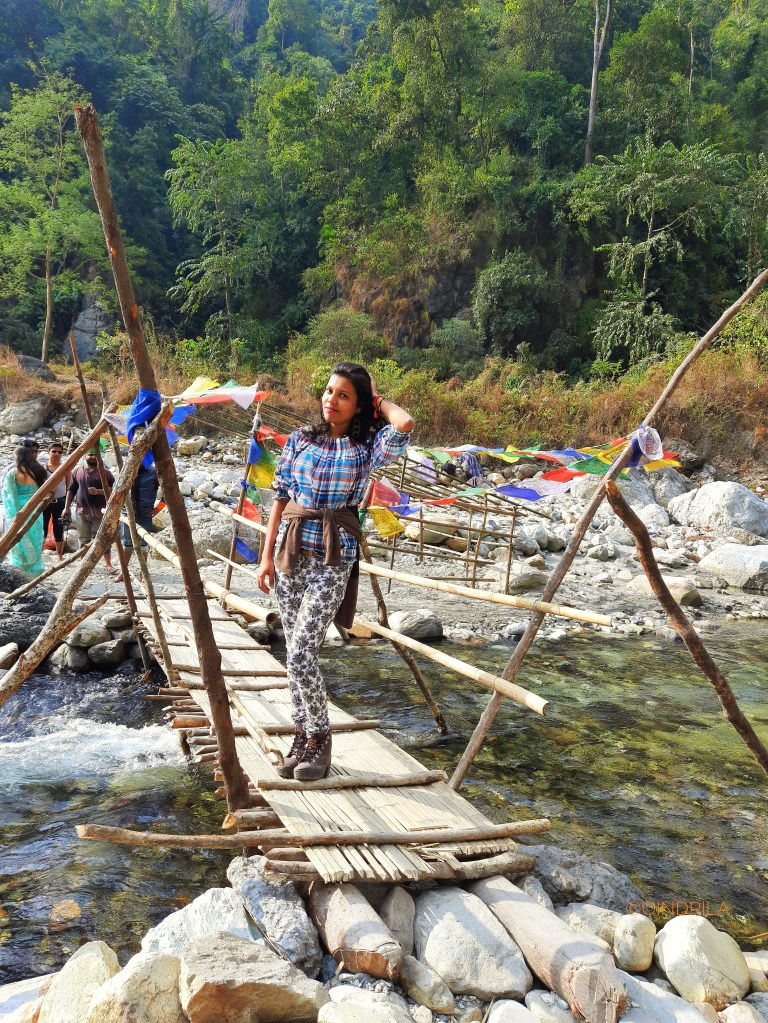
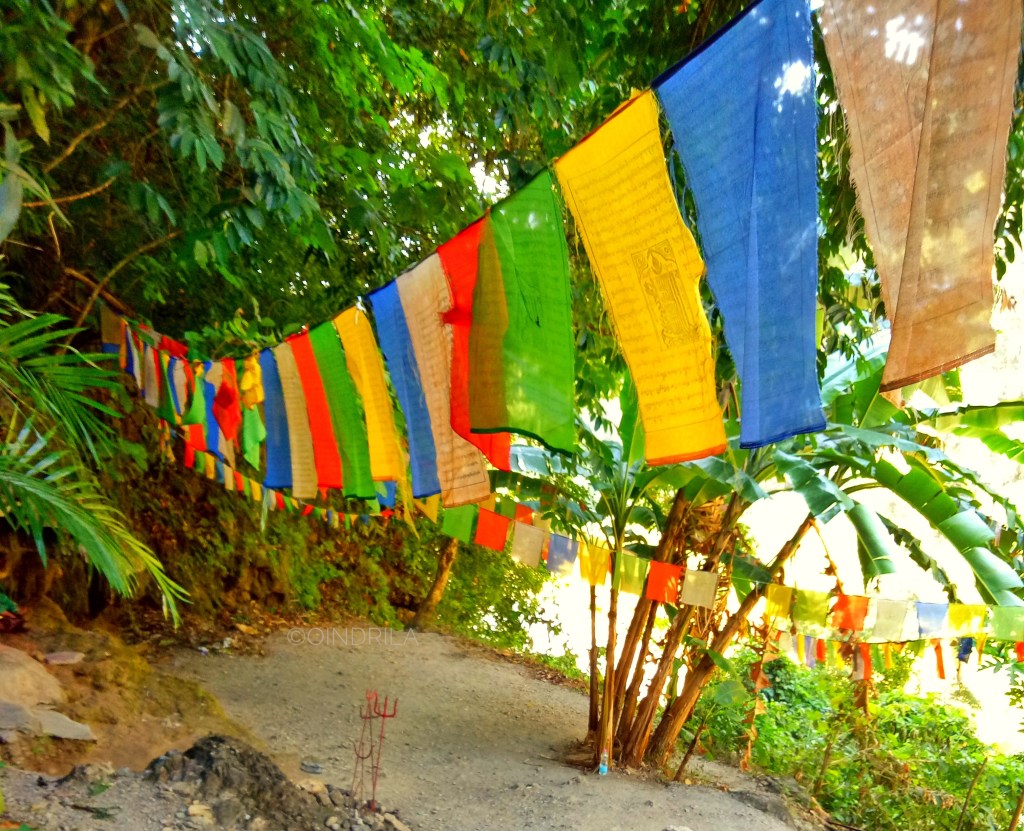
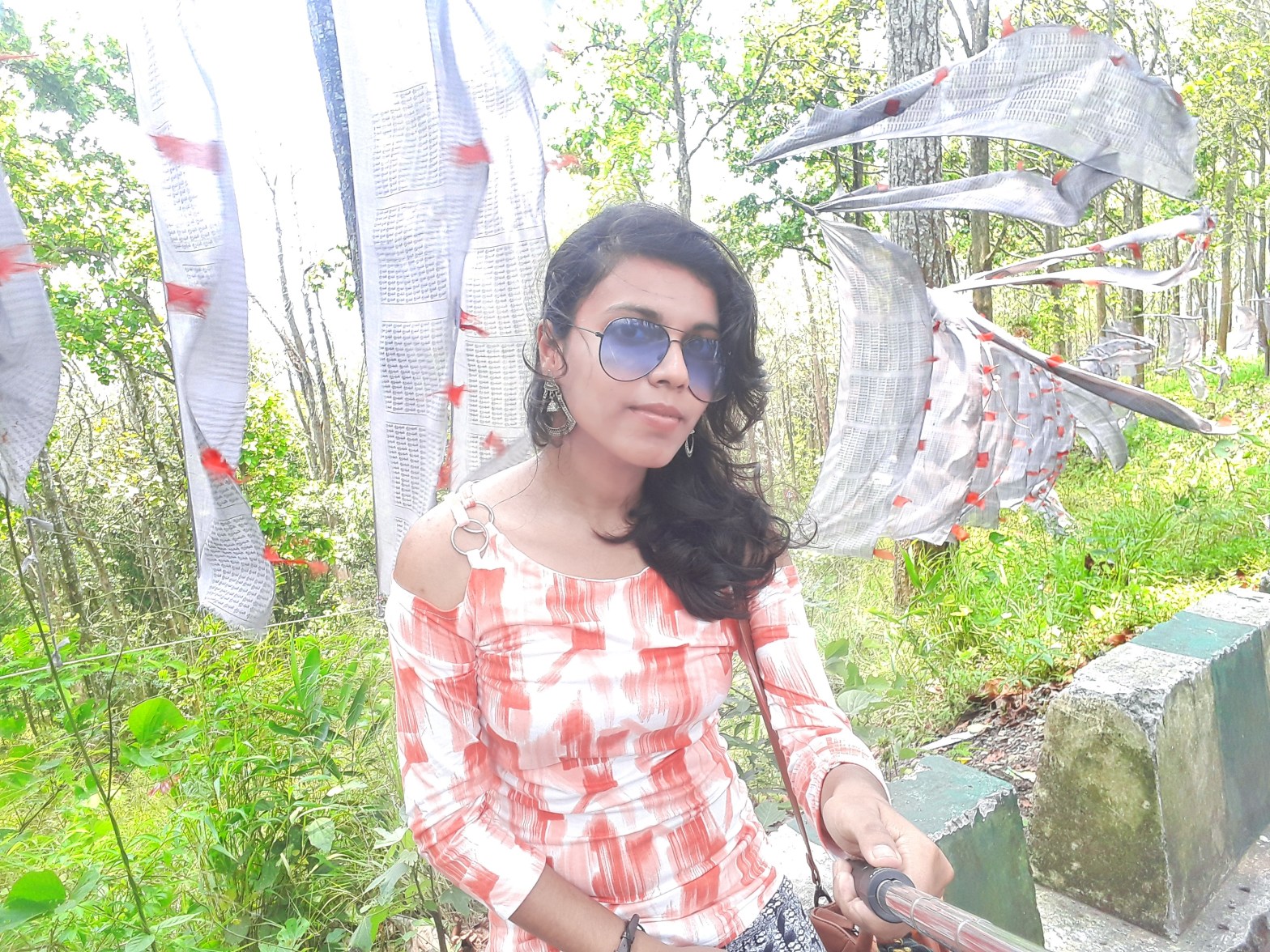
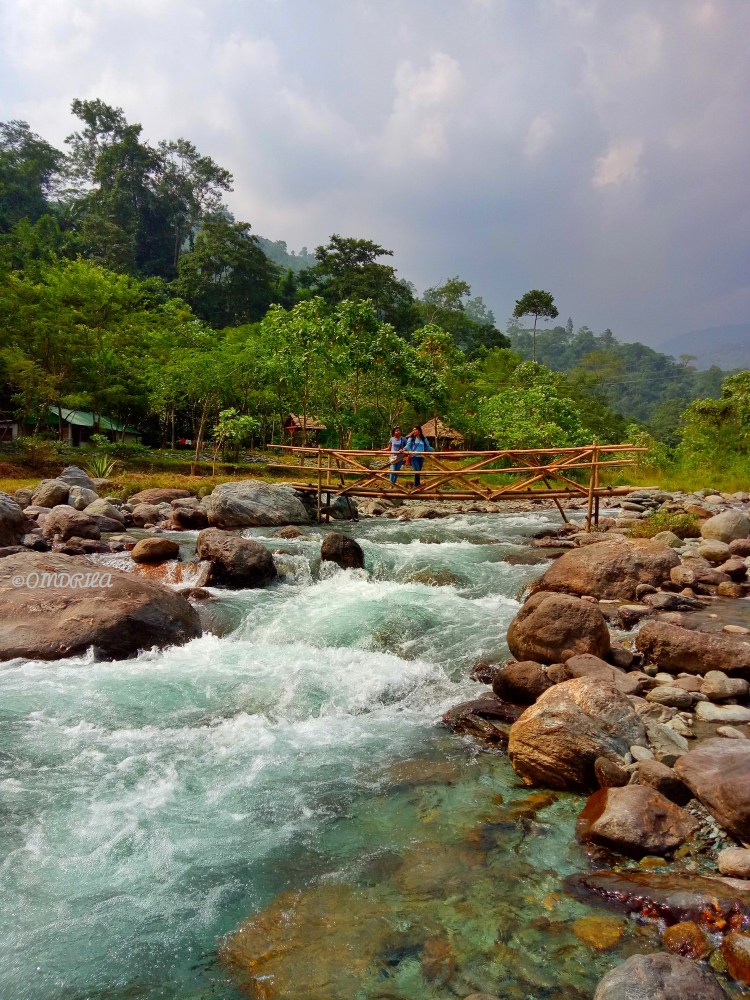
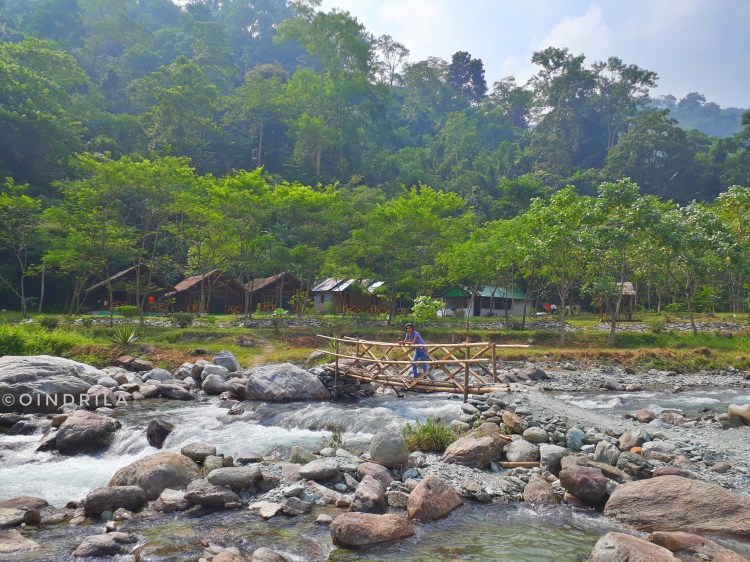
Here Jayanti River flows between Jayanti and Bhutan Hill. After crossing the river there is a man-made bamboo bridge which is decorated nicely with Buddhist Prayer Flags. Local people believe that the breeze passing through these flags make the surrounding area blessed and calms the mind.
After crossing that bridge there is a notched narrow lane through Bhutan Hill that leads to Chhota Mahakal within 10-15 minutes of walk.
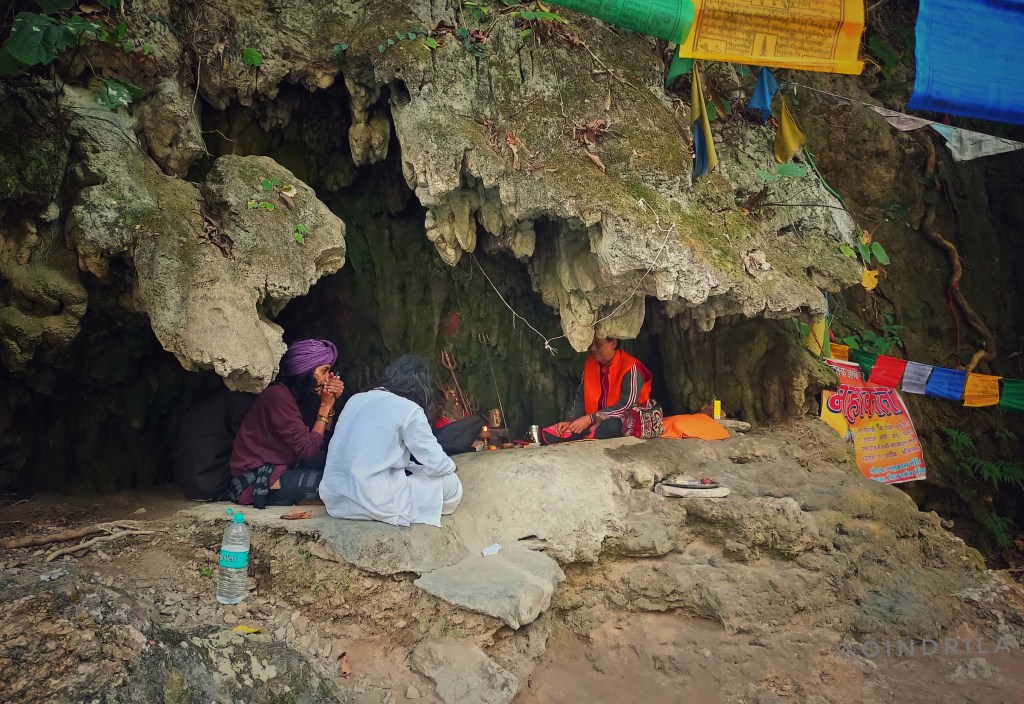
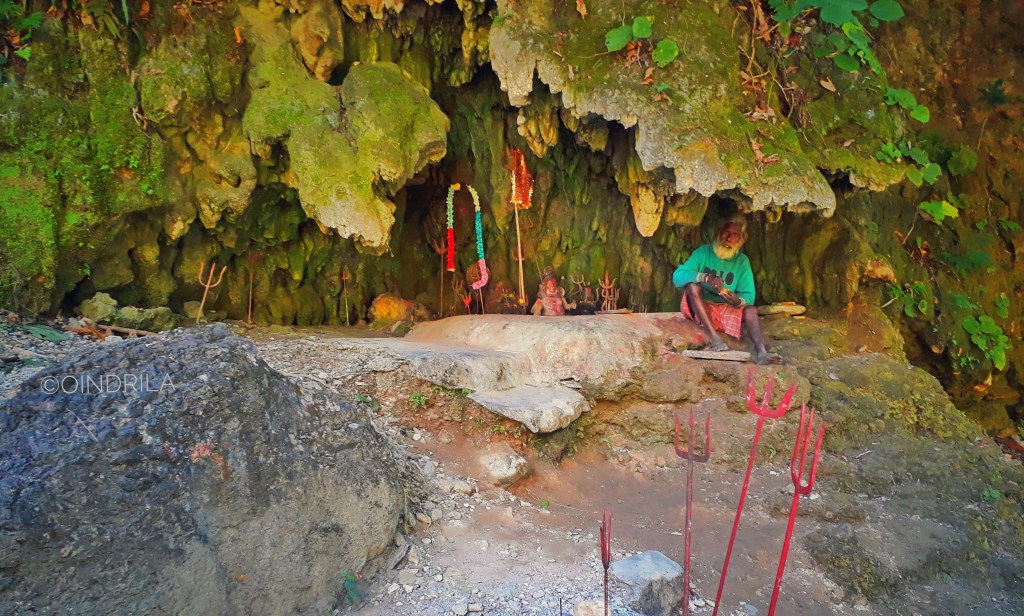
When we reached our destination spot… the mild breeze… the calming sound of nearby waterfalls… the smell of incenses, stole all our tiredness in a jiffy.
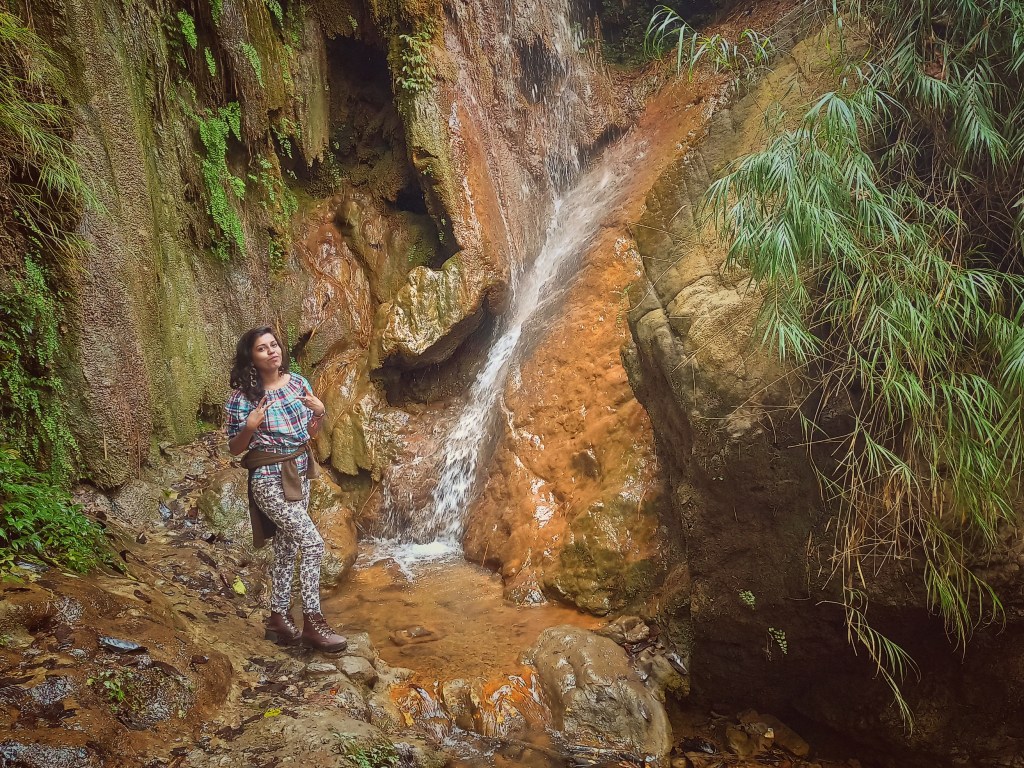
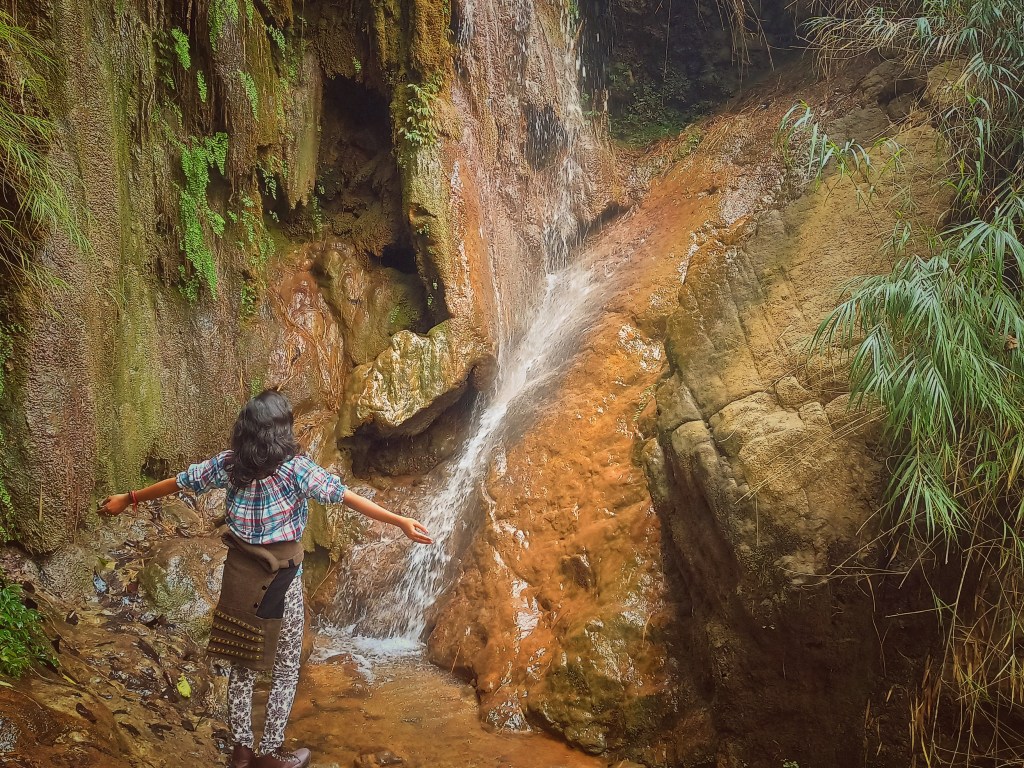
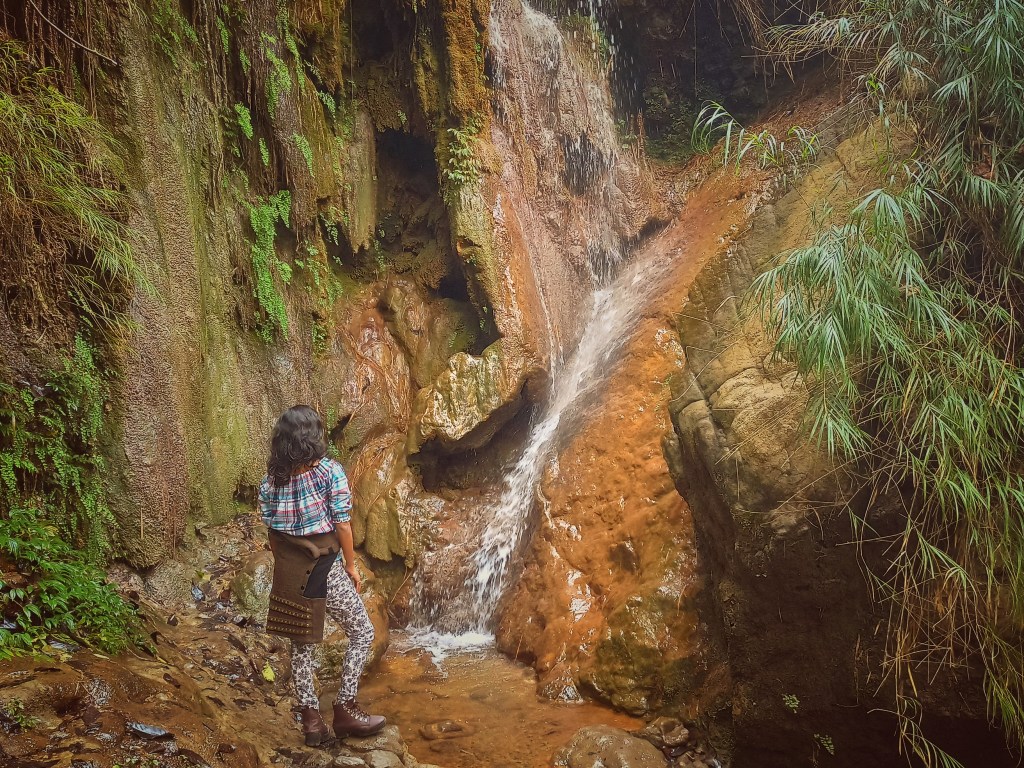
A little further there is a small waterfall near mahakal which is almost 2-3 minutes by walk. One can spend hours just sitting beside it.
We gave Pujo at Chhota Mahakal and then returned Jayanti Check Post near about 2.30 p.m. There we had our lunch and returned to Buxa Tiger Reserve entry point.
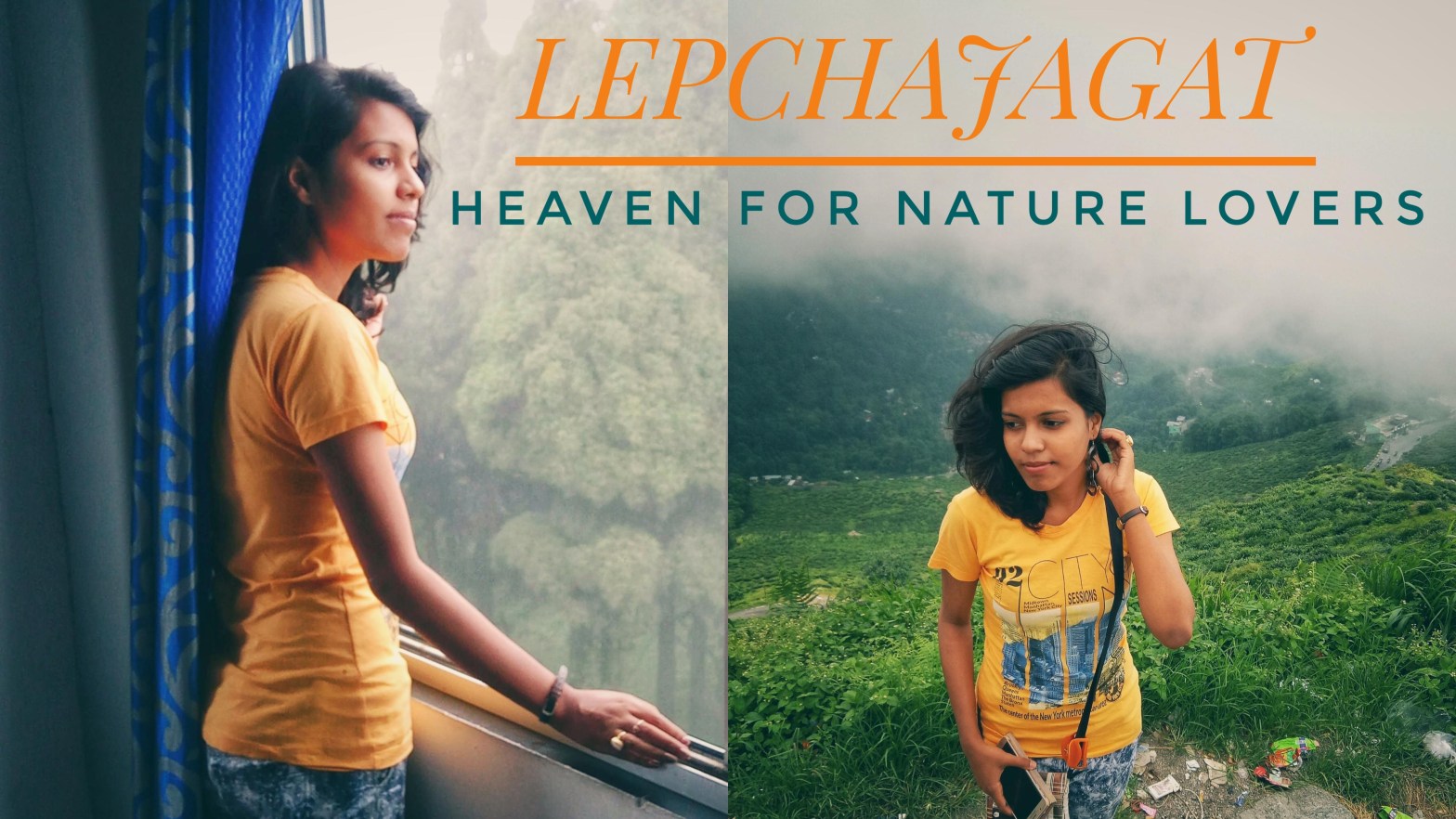
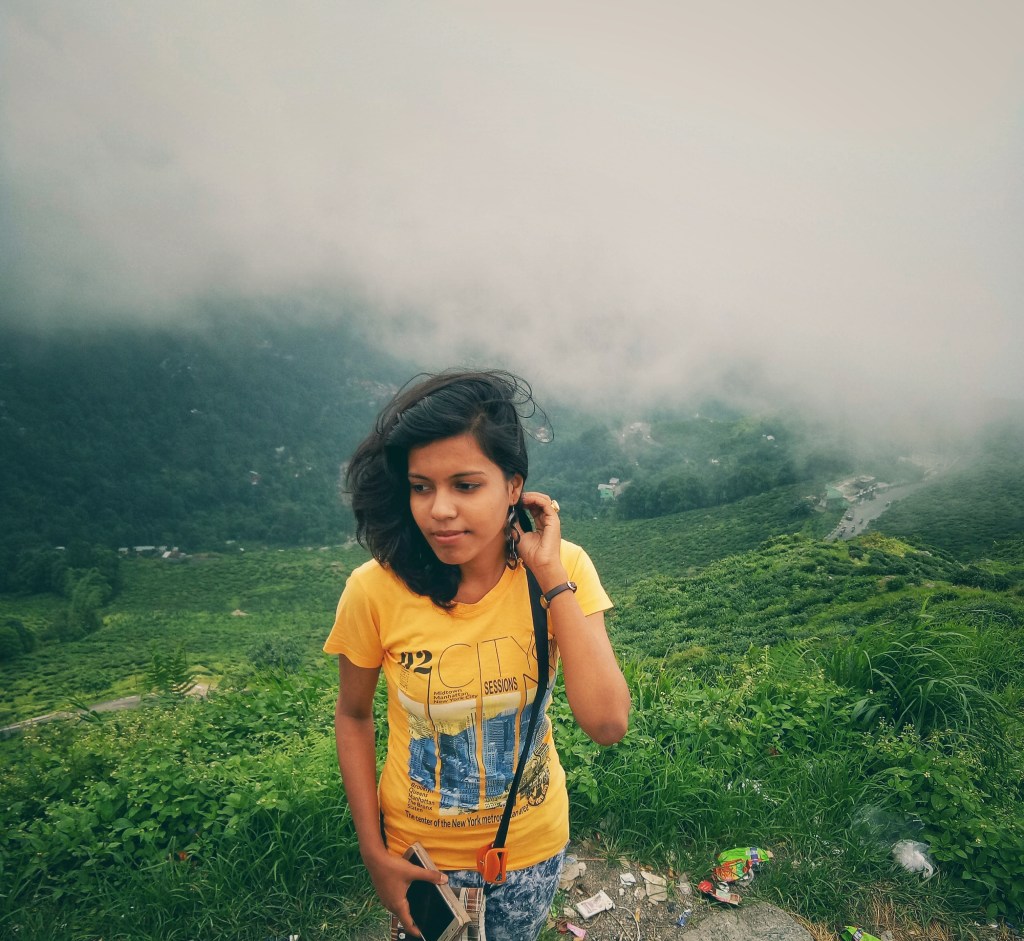
Lepchajagat is a small village located 19 kms away from Darjeeling town. The meaning of ‘Lepchajagat’ is ‘place of the Lepchas’. It’s all about dense forest area full of pines, oaks and rhododendrons.
On the day of journey we started from Jalpaiguri at about 8 a.m. It takes 3-3.5 hours to reach Lepchajagat. We did our breakfast in Siliguri. Our car drove through the curvy roads and stopped at Rohini View Point.
The hilltop of Rohini provides a picturesque view of the hills as well as the plains. You can spend hours by enjoying its beauty.
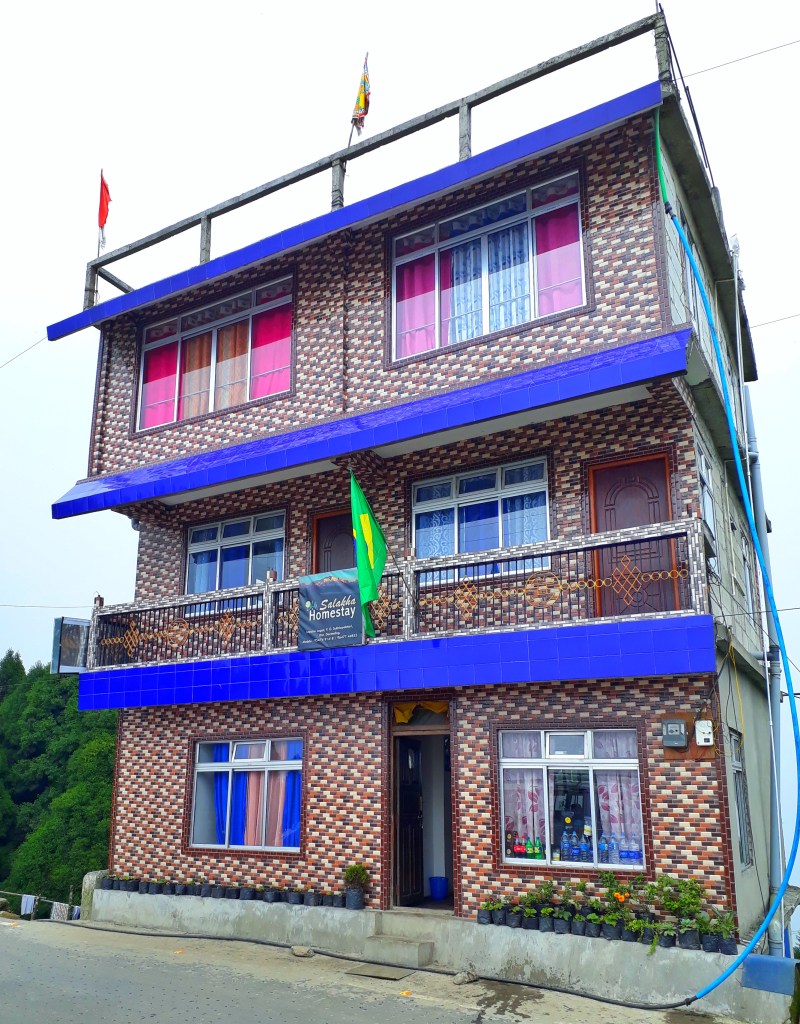
From Rohini, Lepchajagat is at a distance of 1.30 hours. We had booked Salakha Homestay, for 1N2D. After reaching there we got fresh and had our lunch and then went for local sightseeing.
Ghoom Station
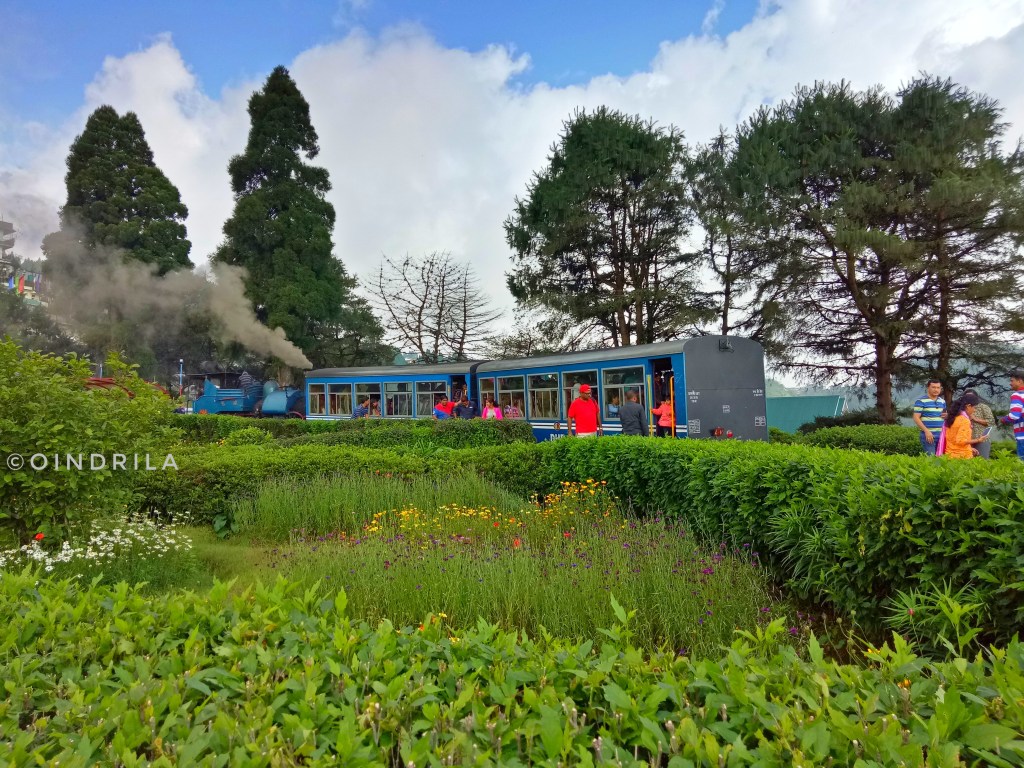
It’s 8 kms away from Lepchajagat. This is the highest point of Darjeeling Himalayan Railway from where the Toy Train starts towards Darjeeling town. The famous Bollywood movie “Main Hoon Na” starring Shah Rukh Khan was shot here.
Ghoom Monastery
It’s about 2 kms from Ghoom Station. Now it’s known as Yoga Choeling Monastery. This is famous for its 15 ft high statue of the Maitreya Buddha.
Batasia Loop
It’s 30 minutes to reach there by car. You have to pay INR 20/- per person as entry fee. It’s famous for the 360 degree view of Darjeeling’s landscape including the majestic view of Kanchanjungha. You can enjoy the toy train making a complete loop while hooting it’s whistle along the way.
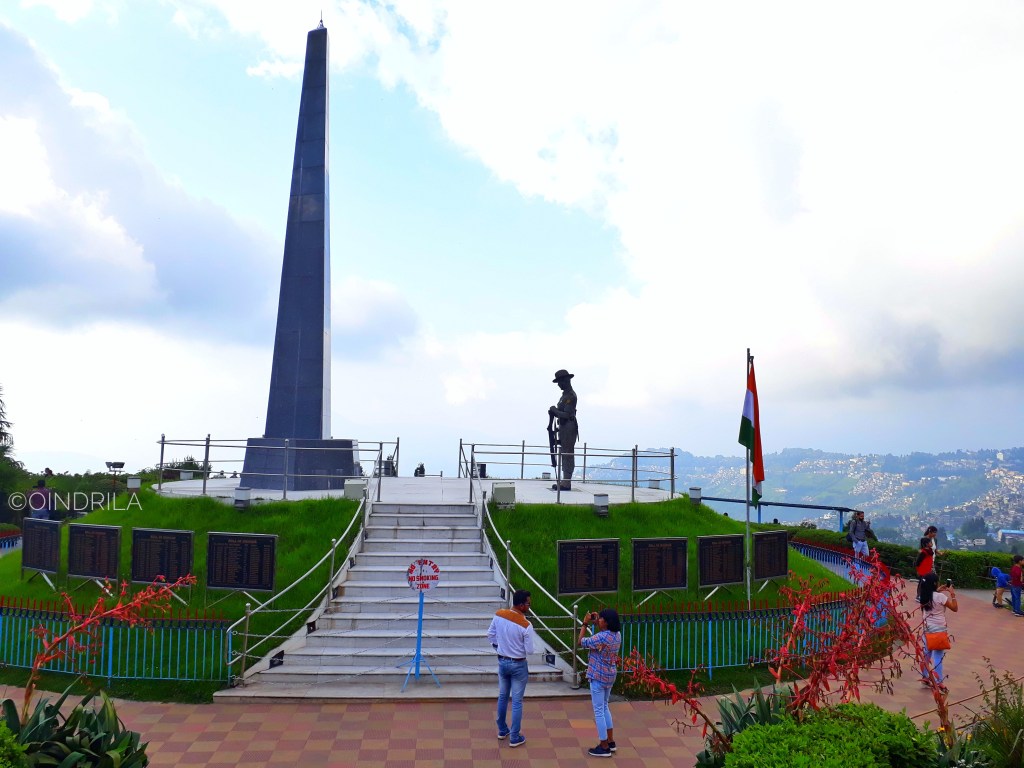
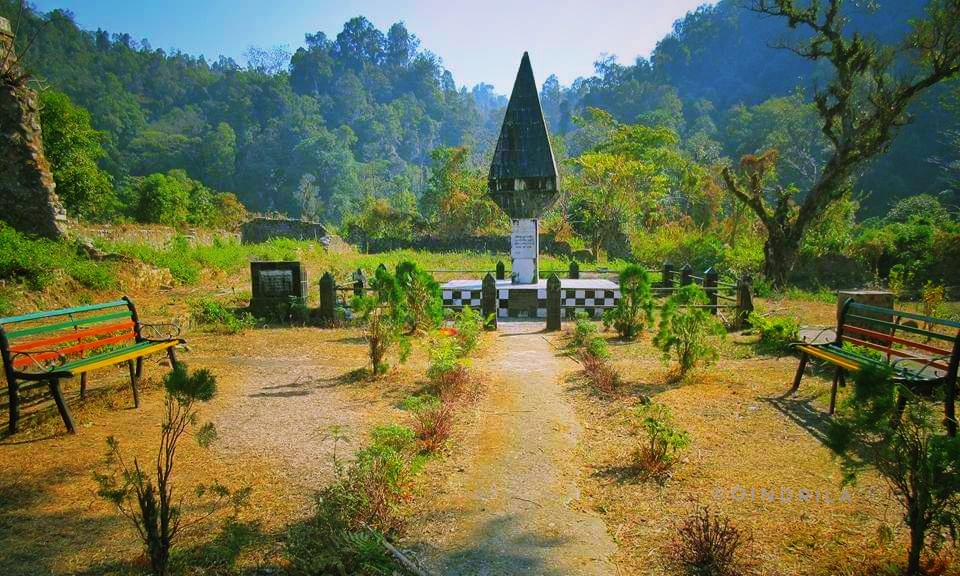
There is an eco garden in Batasia, where you will find many rare species of plants. At the centre of the Batasia Loop, there is a War Memorial, made in the memory of the Gorkha soldiers of Darjeeling, who sacrificed their lives in various wars of Indian Independence.
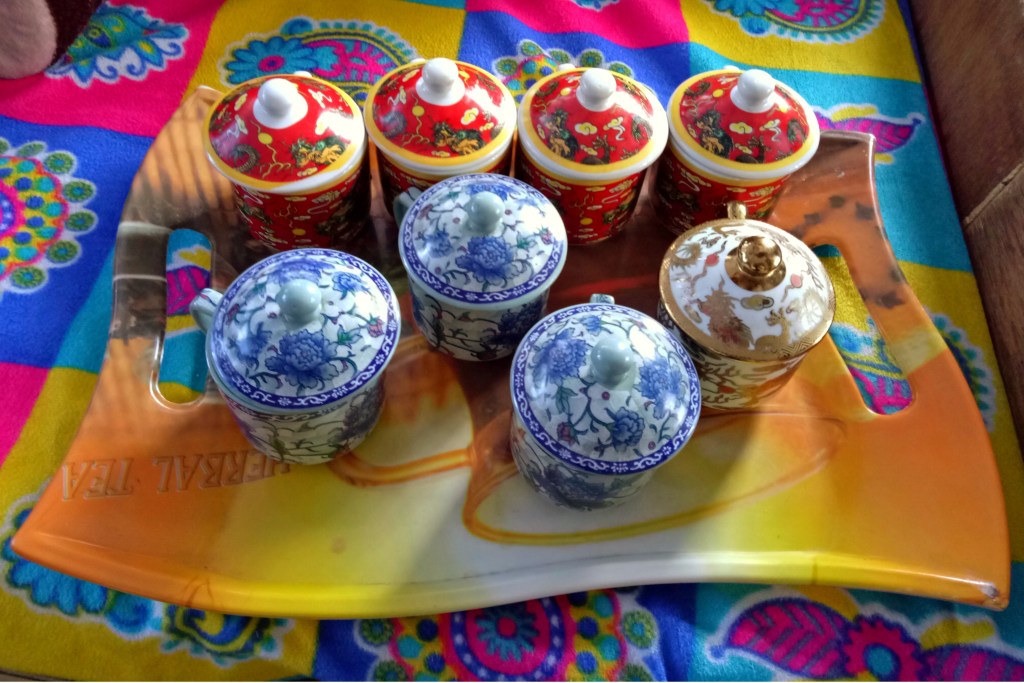
This was it for that day. We returned our homestay in theke evening. We were served tea and pakoras in nicely decorated Chinese cups with lid.
We spent rest of the night in our room enjoying the night view of the locality.
Day 2:
Next morning, as we woke up late, we missed the sunrise. At 20 a.m. after having breakfast, we checked out.
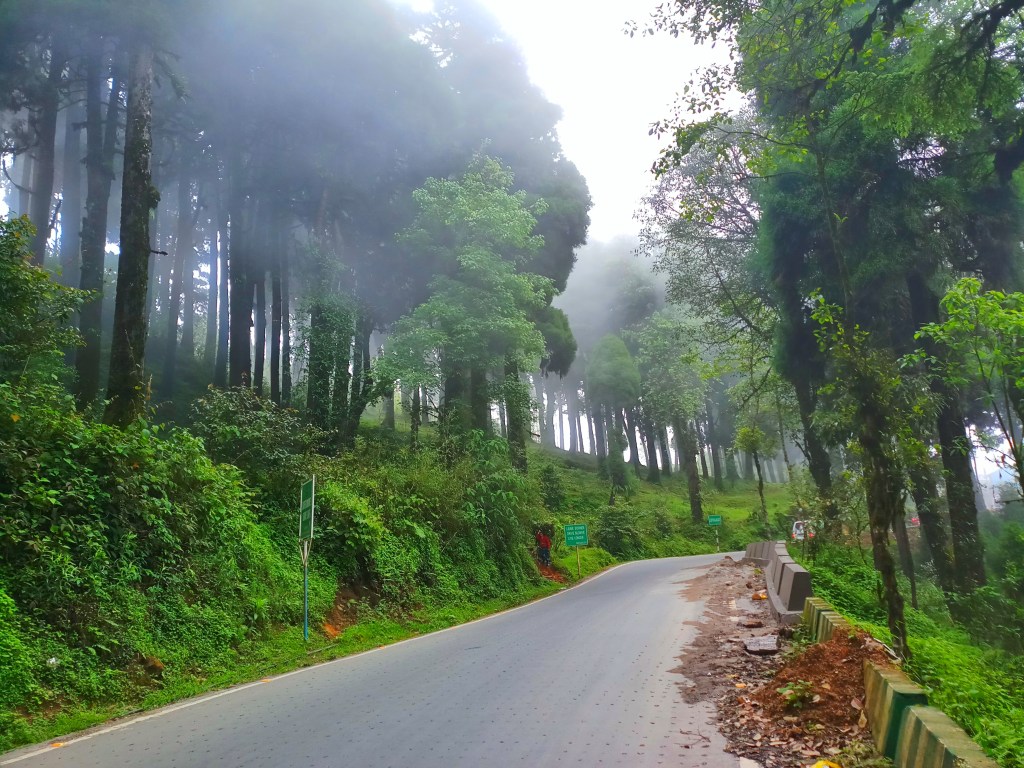
After crossing the locality we stopped our car in the middle of the pine forest. It was seeming like a green heaven… the road went straight through the dense forest and the foggy surrounding.
Our next stoppage was Sukhia Market, which is at about 15 kms from Lepchajagat. It’s well-known for the foreign goods (mostly Nepali and Chinese) at cheap rate. You can buy various types of candies and toffees from here. Many charming materials for home decore 8s available here.
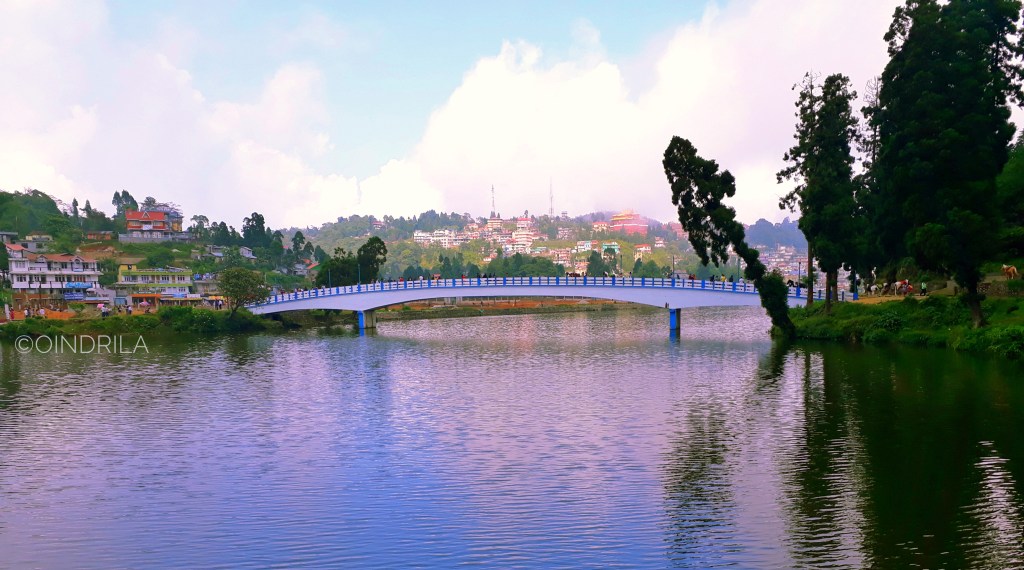
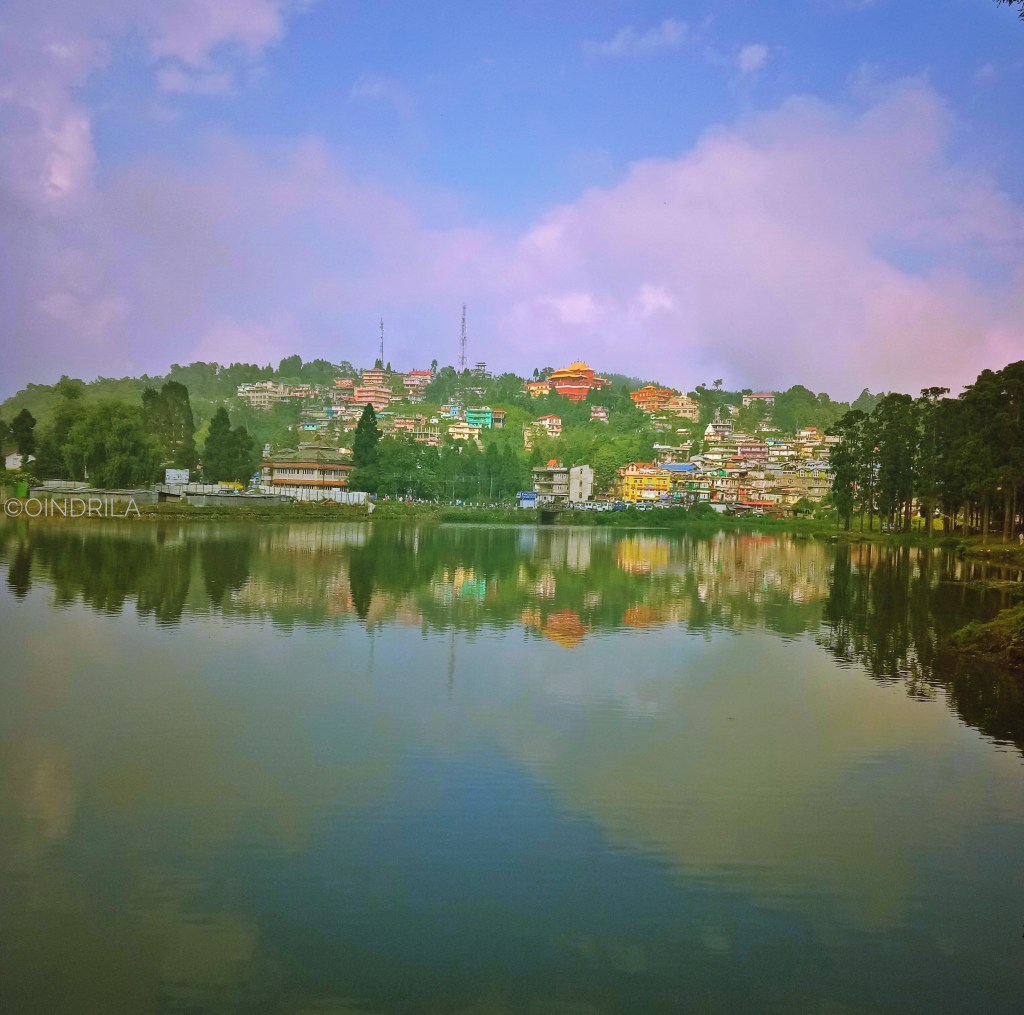
Next se started for Mirik. At about 1 p.m we reached Mirik Lake.
Mirik is 27 kms from Lepchajagat. Sumendu Lake, popularly known as Mirik Lake is the most prominent place of Mirik.
This lake has an 80 ft long bridge running over it. This arch-bridge is named as Rainbow Bridge. Boating in the lake and a pony ride on the lakeside are the exhilarating experiences. The area around the lake has pine trees on one side and a green garden on the other.
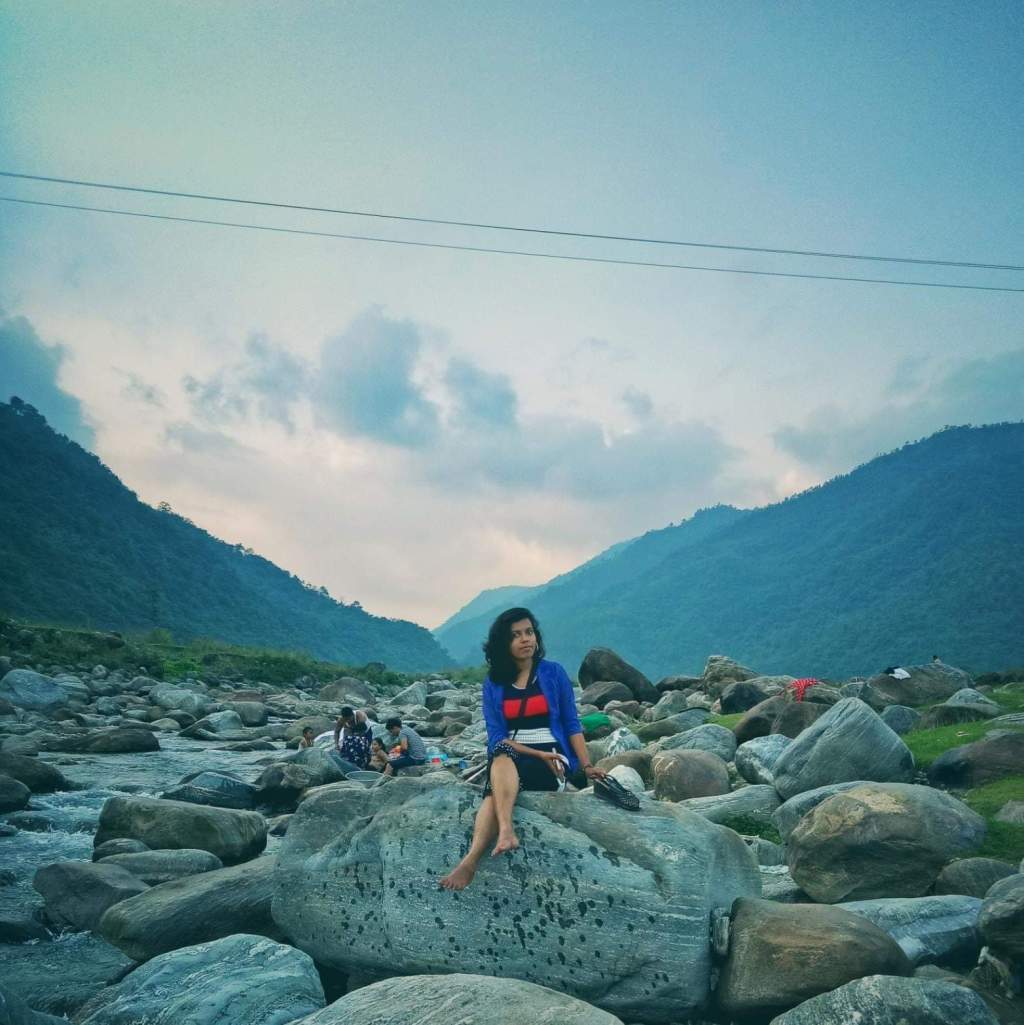
While returning, we stopped at Dudhia, a small hamlet on Mirik-Siliguri highway on the bank of the river Balason. It’s a famous picnic spot. You can spend hours on the banks of the river enjoying the tranquility of nature.
This was the last destination of our trip. After spending hours, we started for home.
This was my 2nd trip with my friends. On the day of journey we started from Jalpaiguri at 10 a.m. It takes 3-3.5 hours to reach Buxa from Jalpaiguri via Alipurduar.
It was one of our most awaited trips. We took some tiffin on the way. The actual journey starts from Rajabhatkhawa check point, taking permit after paying vehicle charge and per head tourist charge.
From this check point Santalibari is straight 15 kms drive through the Buxa forest. Santalibari is the entry point of Buxa trek.
We did our lunch from a local momo shop and started our trek. The village trek association here has a small counter to organise the trek upto Lepchakha.
From here you need to take a guide along with a local gypsy for 2.5 kms on a flat route through the forest to reach the foothill and then the uphill trek route begins.
As this was our first trek in uphills, within few minutes we started huffing and puffing. If you want to complete the whole trek, you have to carry own water bottle and a trekking pole for stability. There is a view point at about 1 km from the trek, where you can get a beautiful view of the valley.
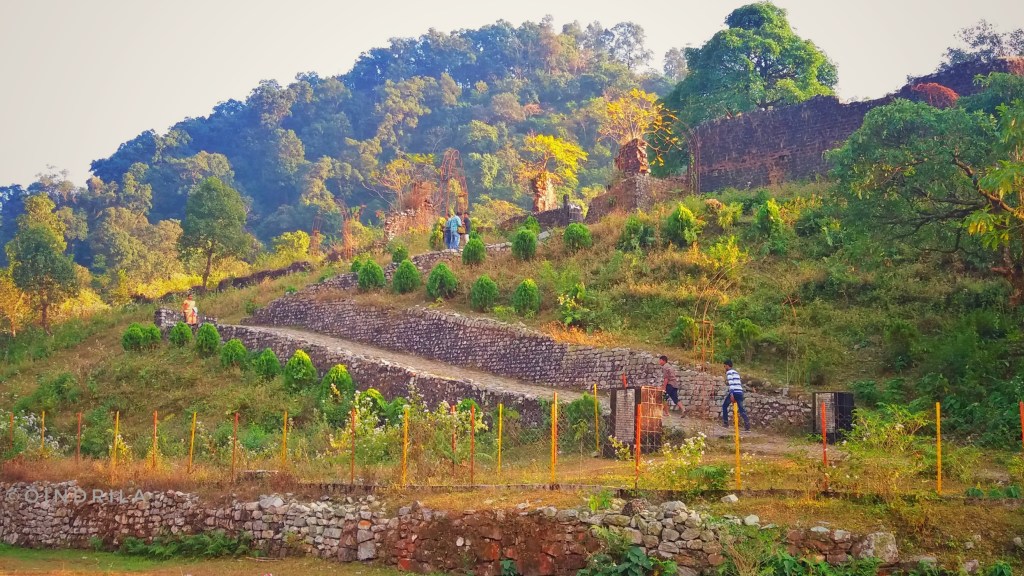
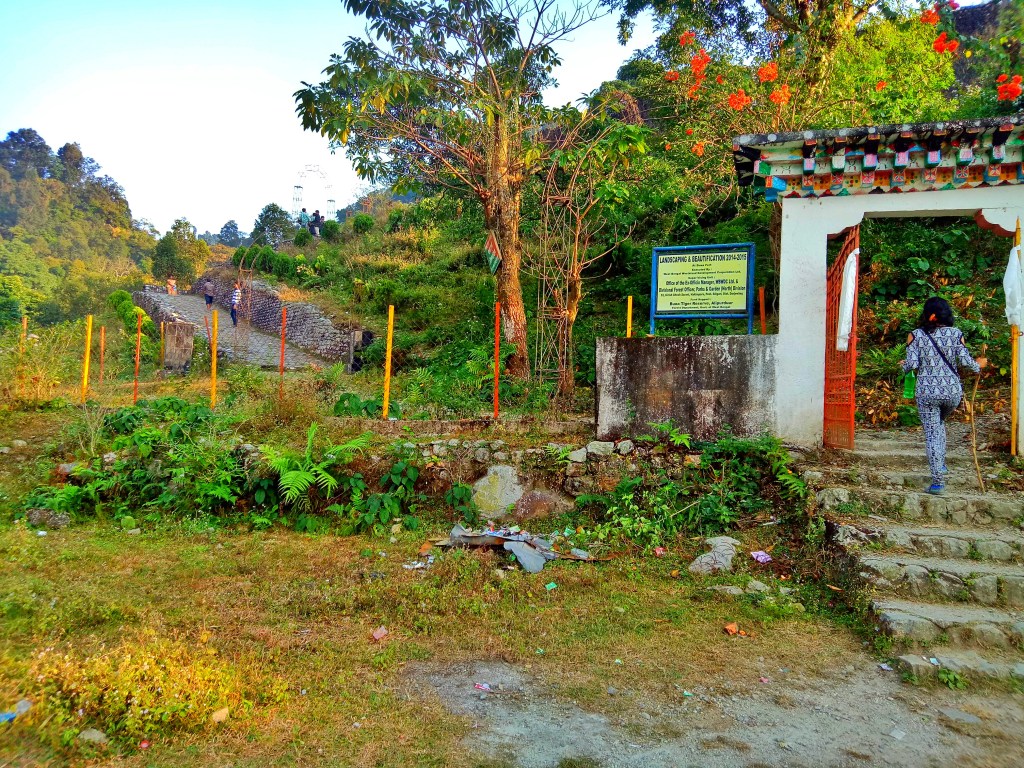
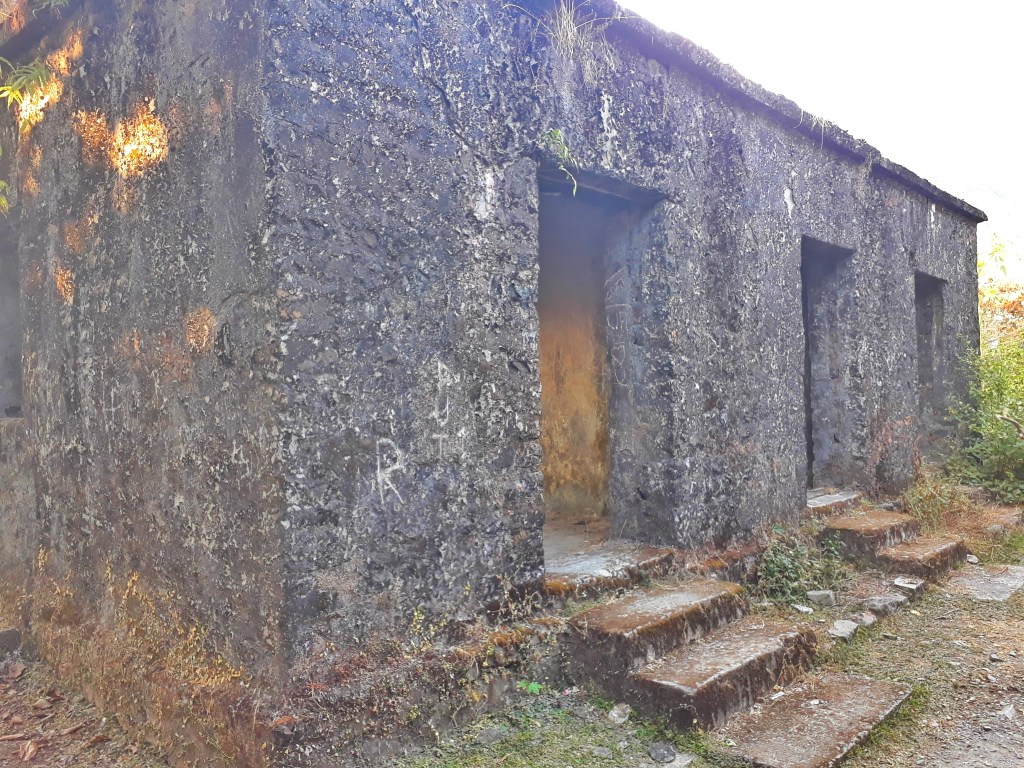
After almost 1.5 hrs, we reached Buxa fort. Though we see only the ruins of the fort today, there is a deep history behind it. This fort once belonged to Bhutan king, was captured by the British in 1865. British used it to detain the freedom fighters here. Later in 1959, when Tibetan monks escaped Tibet due to Chinese invasion, they used it as a refugee camp.
Once during the pre-independence time, the prisoners wrote a letter to Rabindranath Tagore who was in Darjeeling then. He replied to them (On 2nd June, 1939) which has been engraved on the fort wall.
This was 2nd in notoriety after the Cellular Jail in Andaman. After Indian independence, this fort was abandoned.
You can further trek upto Lepchakha, located at the top of Buxa Hill.
As we were too tired to do the trek, we got back to Santalibari near about 5 p.m. Here our personal car was waiting for us and then we headed towards Jayanti.
We had booked Rovers Inn Jayanti which was an hour journey from Santalibari. As darkness descends faster in forest area, there was a calmness among all of us while driving through the dense Buxa Forest.
As we were too much tired, we had our dinner early (within 8 p.m.) and took rest for rest of the evening.
Day 2:
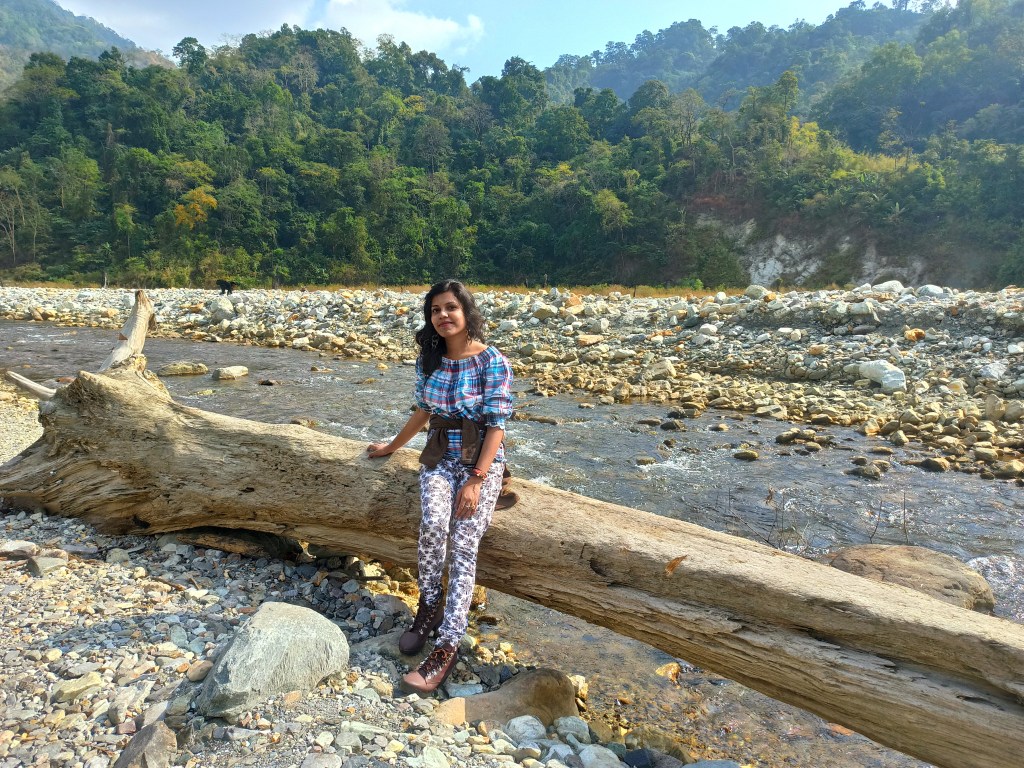
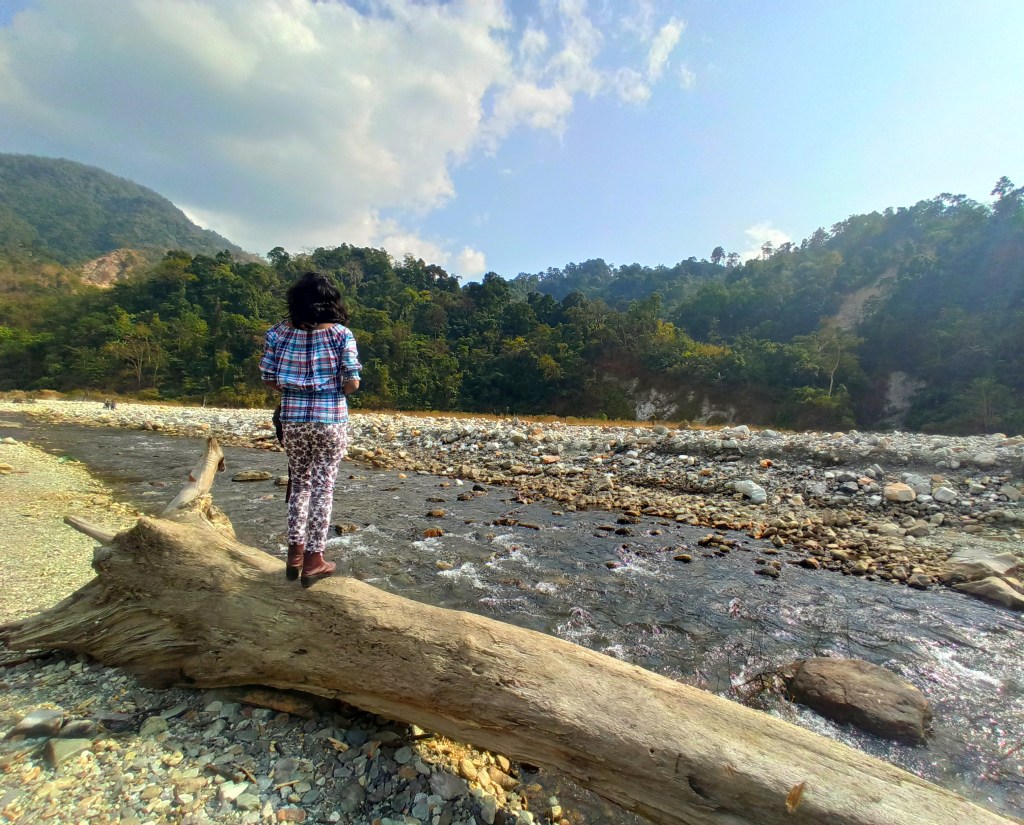
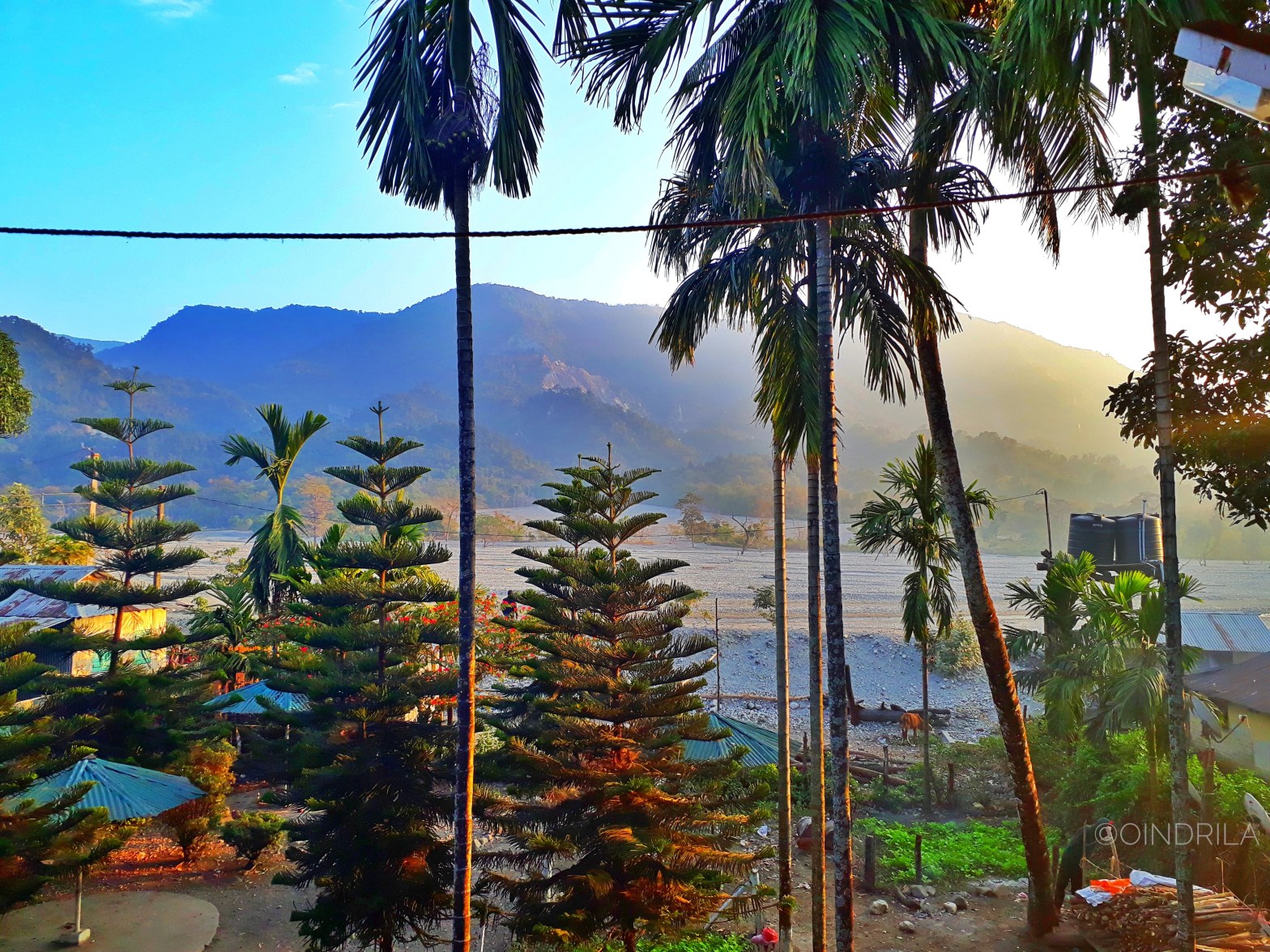
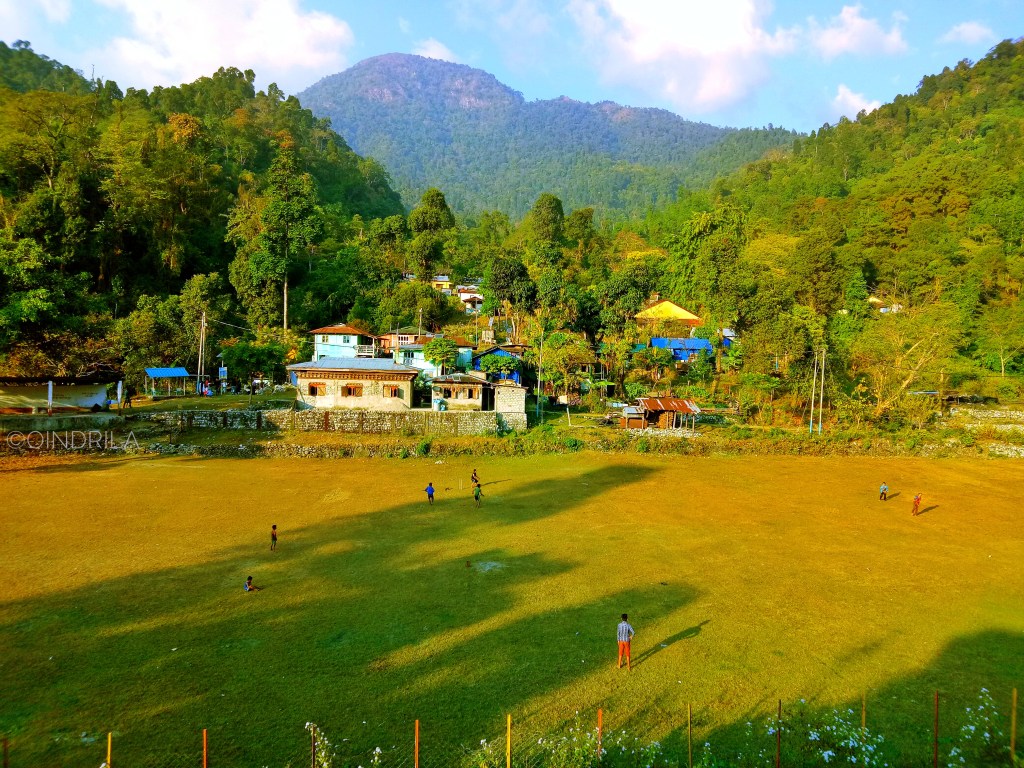
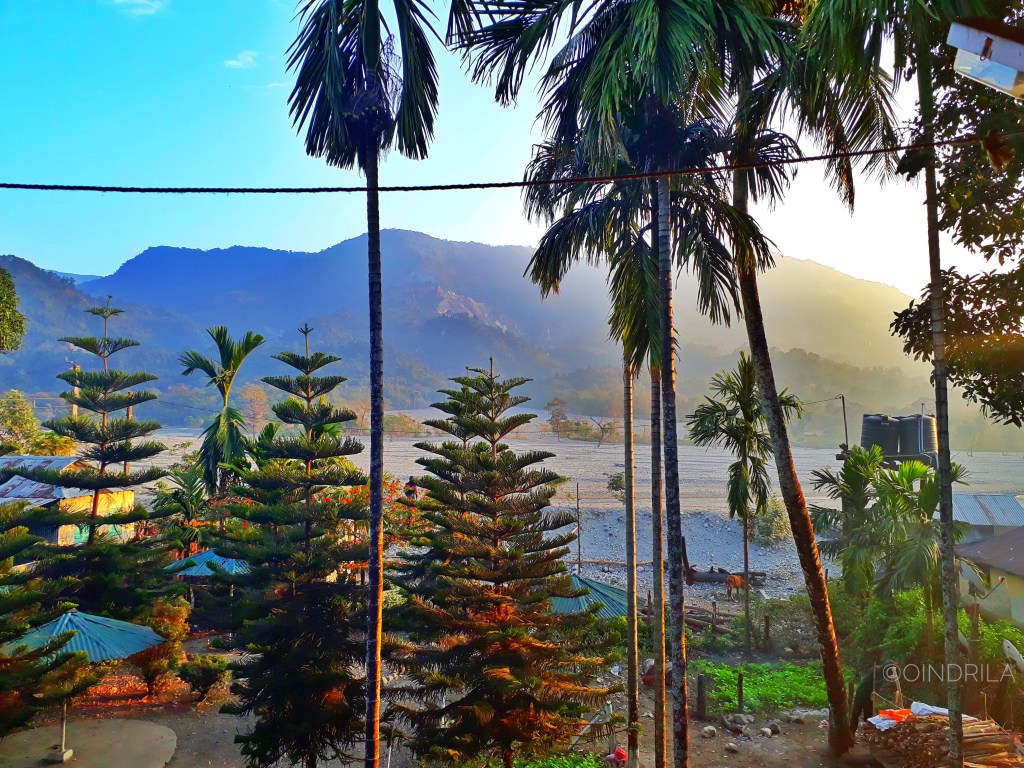
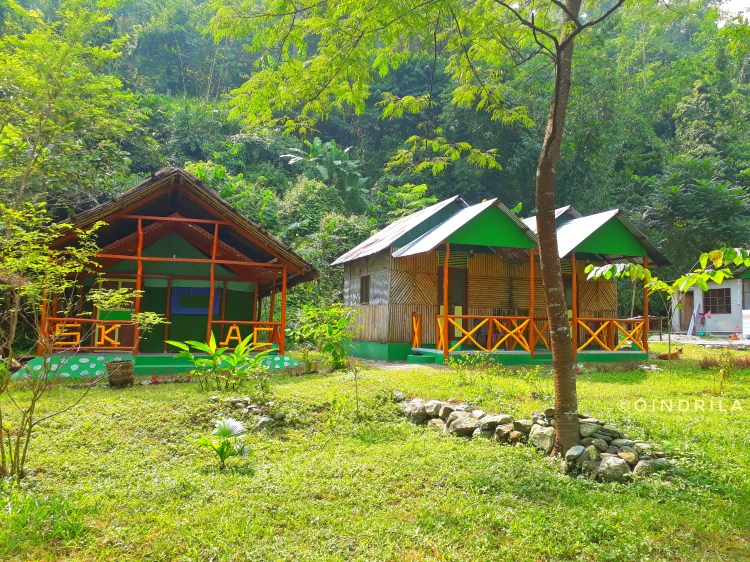
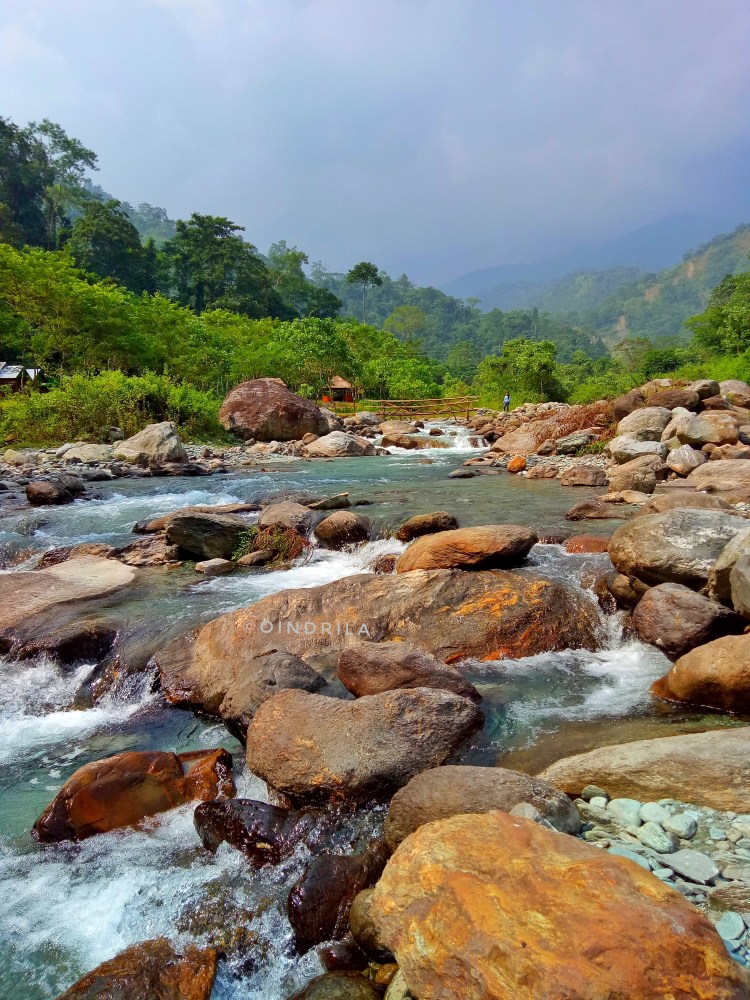
This resort is surrounded by the Bhutan Hill and the Jayanti river flows just beside it. In winter Jayanti riverbed is fully dried up and is full of white pebbles and boulders, that add more beauty to the place.
Next morning we woke up late and enjoyed the beautiful scenario of the Jayanti river from the balcony of the resort. After having our breakfast we got ready for our next trek. For this the owner of our resort arranged a guide along with a gypsy.
Jayanti river flows between Jayanti and Bhutan Hill. As the gypsy goes through the stony rugged dry riverbed to reach Mahakal, it’s not possible to do Mahakal Trek during rainy season. After crossing the river there is a man-made bamboo bridge which is decorated nicely with Buddhist Prayer Flags. After crossing the bridge there is a notched narrow pathway through Bhutan Hill that leads to Chhota Mahakal within 10-15 minutes of walk. A little further there is a small waterfall near Mahakal which is almost 2-3 minutes of walk. You can spend hours just sitting beside it.
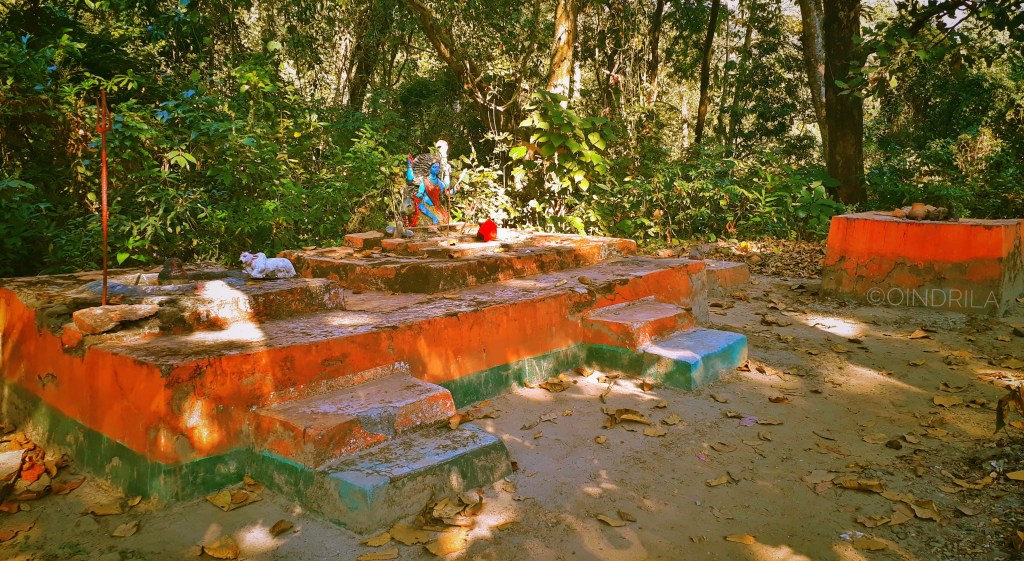
We gave Pujo here and then returned to Jayanti River. Our next trek was to Pokhri lake.
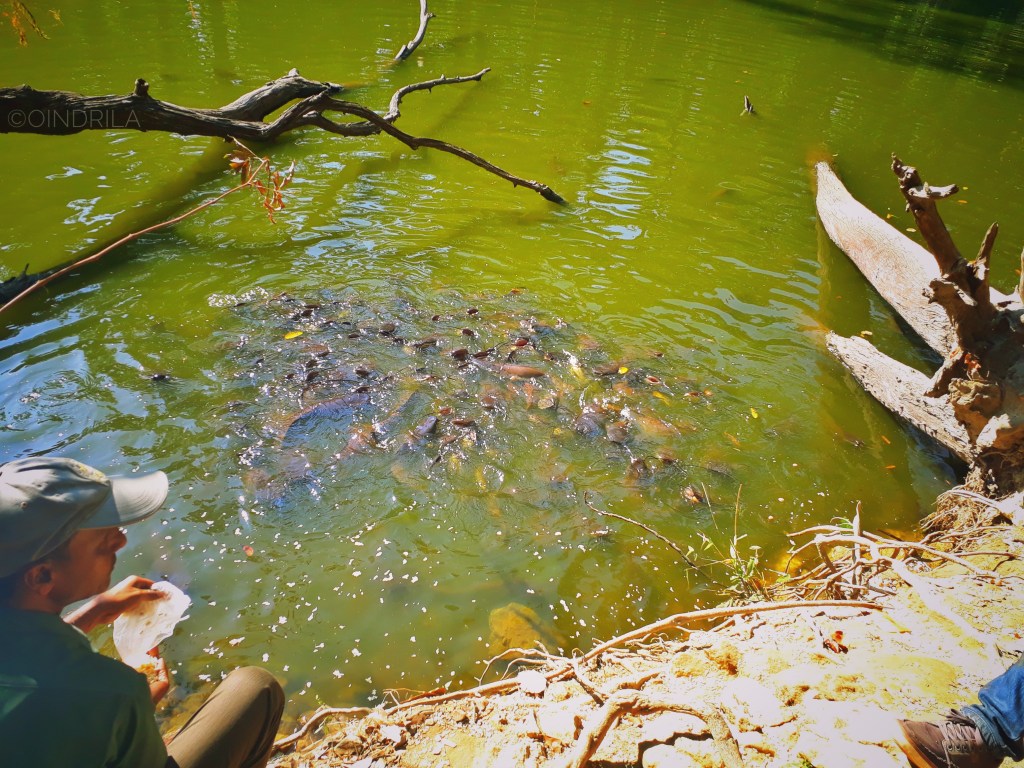
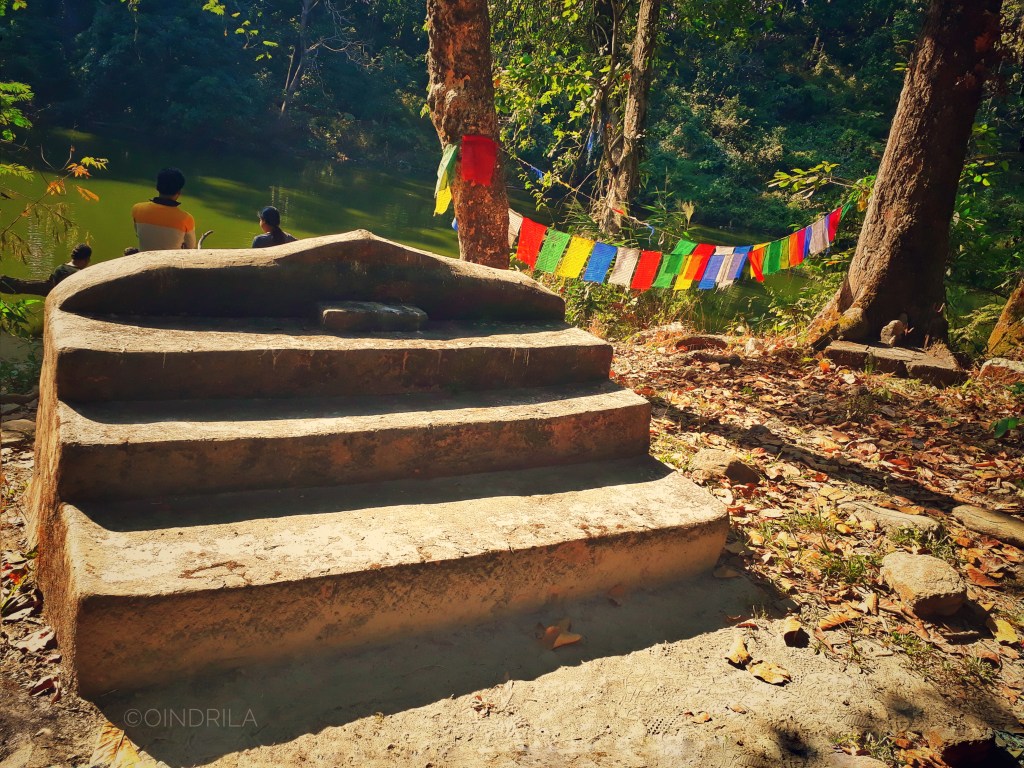
The Pokhri (means “Lake”) is located at a distance of 5-6 kms from Jayanti. This is a sacred pond to local people. The lake, popular for its huge population of cat fishes (Magur) and turtles, is surrounded with greenery all around. Travellers feed the fishes in the lake with puffed rice.
It was a steep climb and we were gasping for breath. After about an hour of trekking we reached the pond. There we fed the cat fishes and then took some rest.
Our last destination of this trip were Bhutia Basti and Chunia Watchtower. Our guide arranged the safari from the forest range office. At about 4 p.m we reached BB Watchtower. Despite waiting for an hour, we didn’t get to see any wild animal. Some peacocks and deer were seen from the far. The sun was setting down and we had to leave for our home, so we didn’t proceed further for Chunia Watchtower.
While returning we were lucky enough to get a view of a wild elephant on our way. And this was the end of ourhis trip. At about 7 p.m. we headed towards Jalpaiguri.
This is the first post on my new blog. I’m just getting this new blog going, so stay tuned for more. Subscribe below to get notified when I post new updates.
Ahaldara is still one of the virgin destinations of North Bengal. It’s a famous sunrise view point of Kurseong sub-division.
Day 1:
On the day of journey, we started at 09:30 a.m. from Jalpaiguri. Via Sevoke road, there are two ways to reach Ahaldara. First one is by taking the steep winding road near Kalojhora, that goes uphill on the left (from here Ahaldara is nearly 20 kms) and the second one is by taking a left turn after crossing the Birik forest. It’s a one-way route that leads to Shelphu Hill, Ahaldara. The latter one is in far better condition than the 1st one.
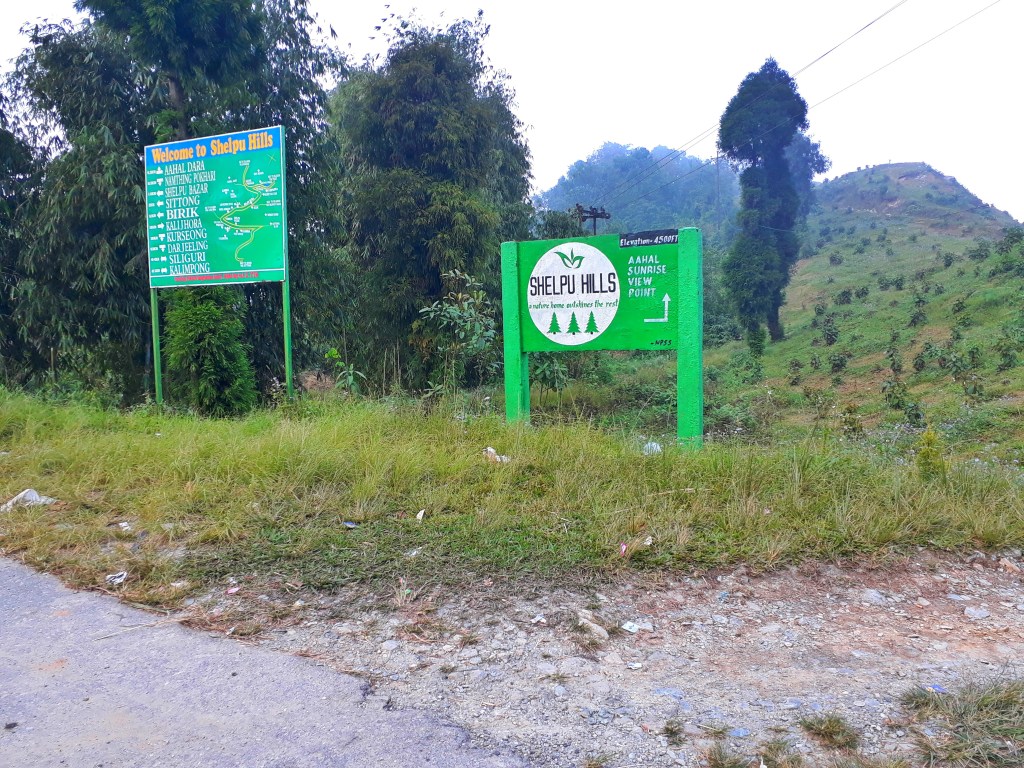
It was mid-day when we reached there. From the signboard of Shelphu Hill, it’s an uphill trek of 300-350 meters to Ahaldara.
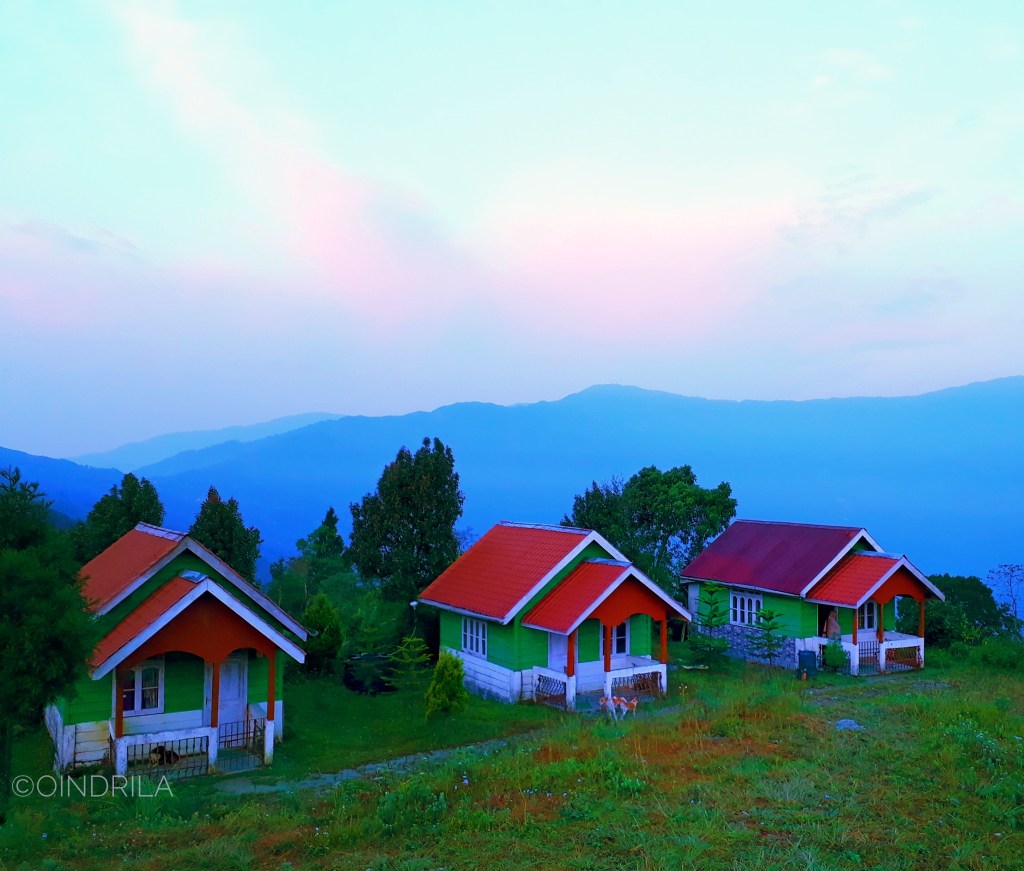
We had booked Humro Home Ahaldara, owned by Mr. Padam Gurung. There are 3 cottages of Humro Home available for accommodation. This place is popular for the 360 degree view covering Terai, Dooars, Kurseong, Darjeeling, Kalimpong and Sikkim, including with the wide range of Kanchanjungha.
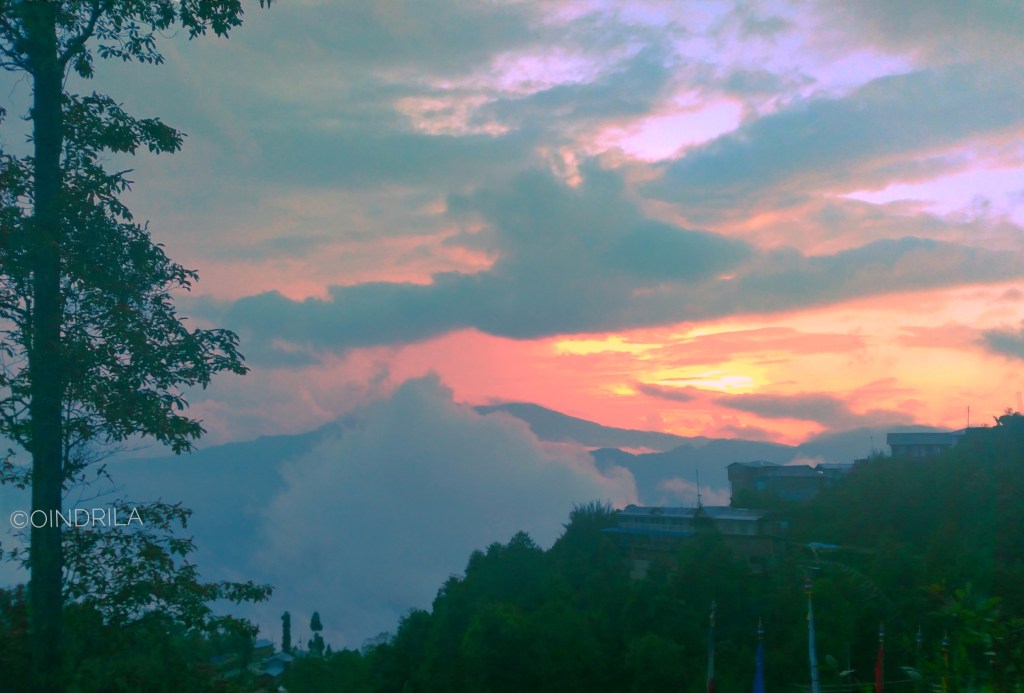
After having our lunch we rested for some time. We spent the rest of the evening enjoying the sunset from the view point.
At dinner, we were served fresh chicken curry. As we were so much tired, we went to bed early, at about 10 p.m.
As the night was getting darker, the fury of the cold wind was increasing. It was seeming like nature was doing her Macabre outside. We were so scared but soon fell asleep unaware of the time.
Day 2:
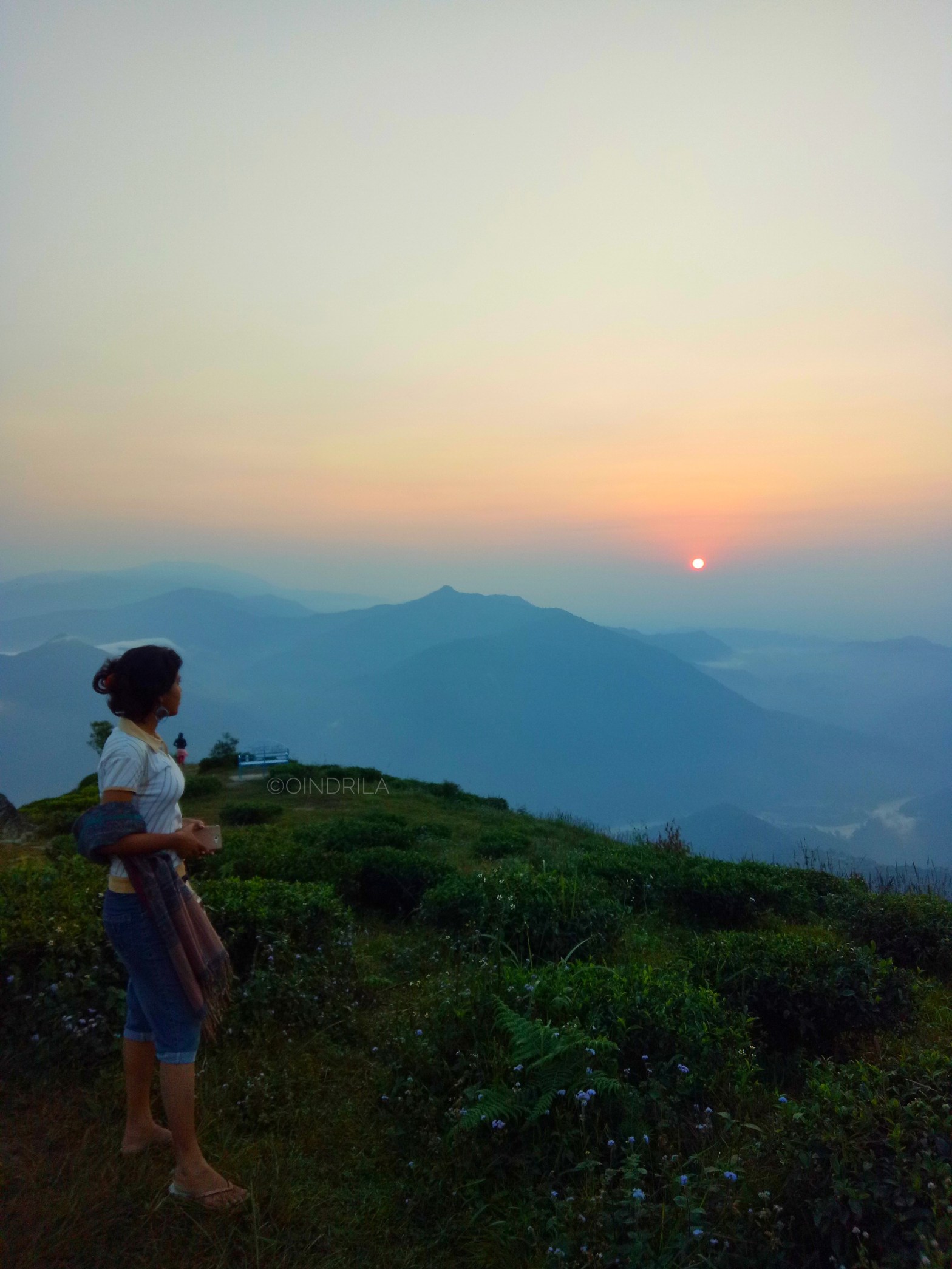
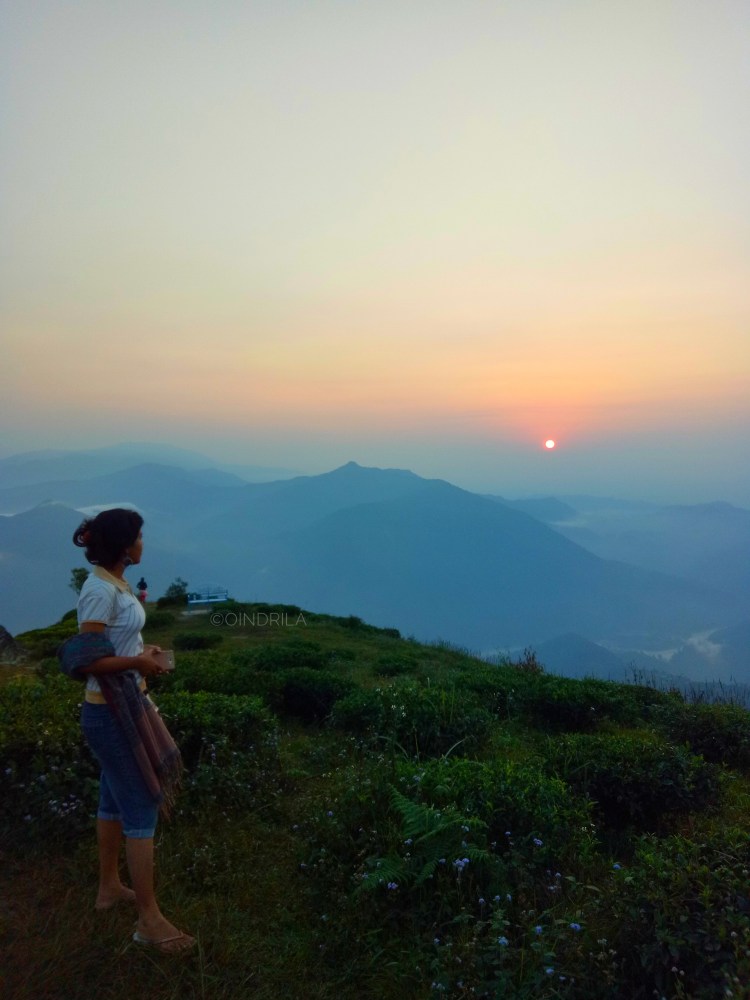
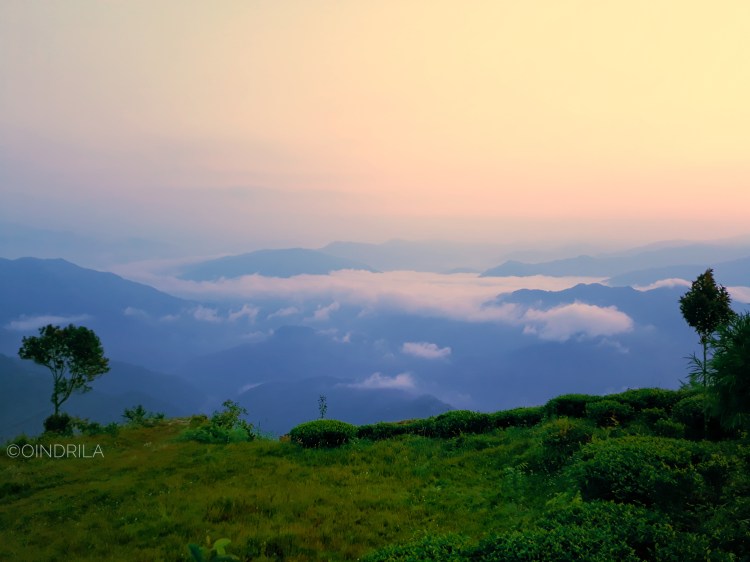
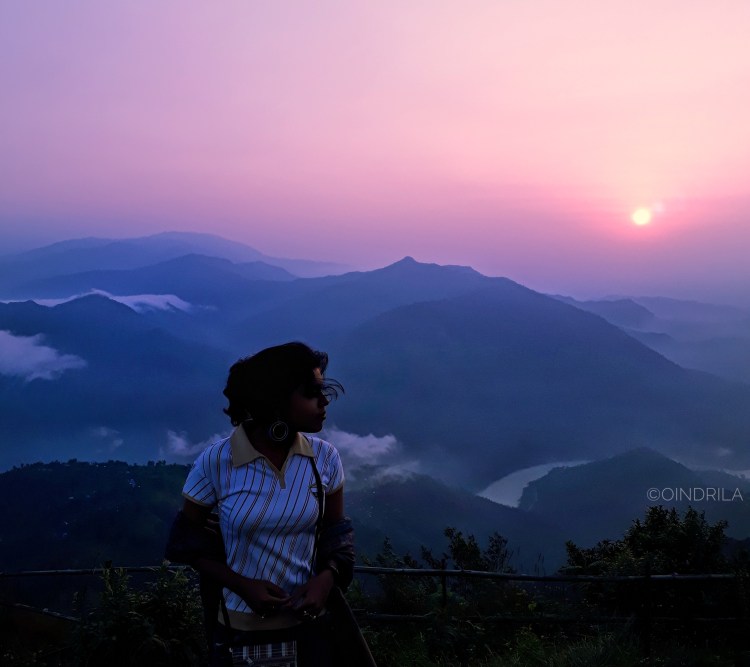
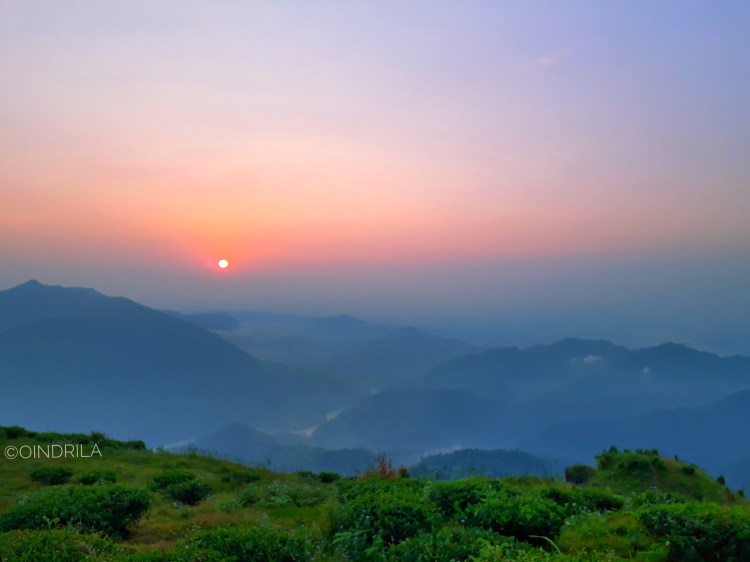
Next morning we woke up early to enjoy the sunrise. We were waiting in our room for the first glimpse of the sun. After almost half an hour we went out of our cottage and climbed to the top of the hill. We found ourselves in the middle of a bed of clouds.
We felt nature at its best at this heavenly hour. The golden rays of the sun gave a bright tinge to the clouds, meadows and the mountains. The temperature was nearly 15 degree Celsius and it was extremely windy. This was one of the memorable sunrises I’ve ever seen till now.
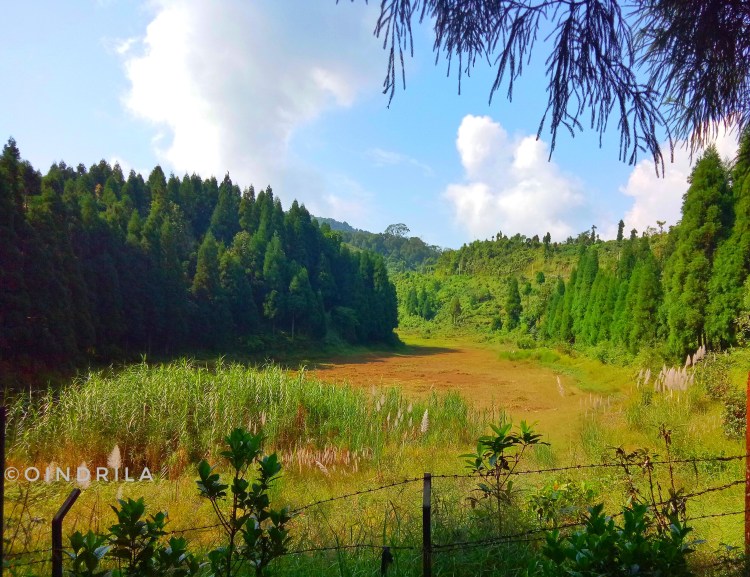
At 9 a.m after having our breakfast with tea we headed for Namthing Pokhri. This is a natural lake, popular for the Himalayan Salamander. The lake is surrounded by dense cover of pine trees which host a large number of birds.
Except rainy season, the lake remains dry during the rest of the year. This area is surrounded by orange orchards. Sittong correctly derives the epithet of being called the “Orange village of West Bengal” owing to large plantation of orange trees.
From there we returned our cottage and had some tiffin with roti-sabji. At 11 a.m we checked out and started for Shivakhola.
It takes almost 01:30-02:00 hours from Ahaldara to reach Shivakhola. Only Xylo/Bolero/Sumo cars can be driven by expert drivers through this steep pathway.
Shivakhola Adventure Camp is simply a heaven for Nature lovers. There is a small stream adding more beauty to this village.
This camp offers opportunities for trekking, bird watching and other adventurous activities.
There is an ancient temple of lord Shiva on the bank of the river and the Shivakhola village lies at a distance of 1 km from the temple.
After visiting Shivakhola, we headed towards home via Sukna road of Siliguri. The road takes a sharp U-turn to Rongtong. This road between Rongtong and Sukna is one of the most picturesque roads and is a great treat to the eyes.
I’m born and brought up in a small city Jalpaiguri of North Bengal. So I felt myself always close to the mountains.
After getting a govt. job, my girls’ gang planned a short trip to Rishyap… which is a famous tourist spot of North Bengal. We booked hotel Sonar Bangla for 12th May, 2017. We took almost a week to book the hotel and arrange a car for our whole trip.
On that day we started from Jalpaiguri at 9.45 a.m. and had some breakfast at Lataguri.
Our first destination was Gorubathan. It’s a small town in Kalimpong, situated on the bank of Chel river, which is a famous local picnic spot.
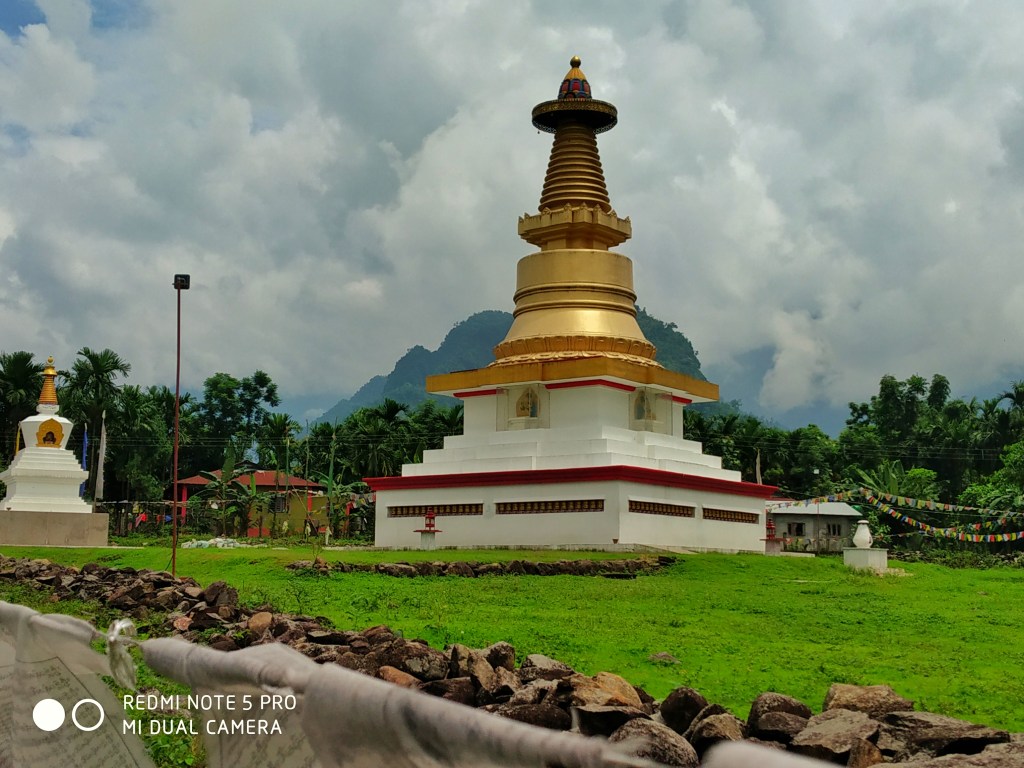
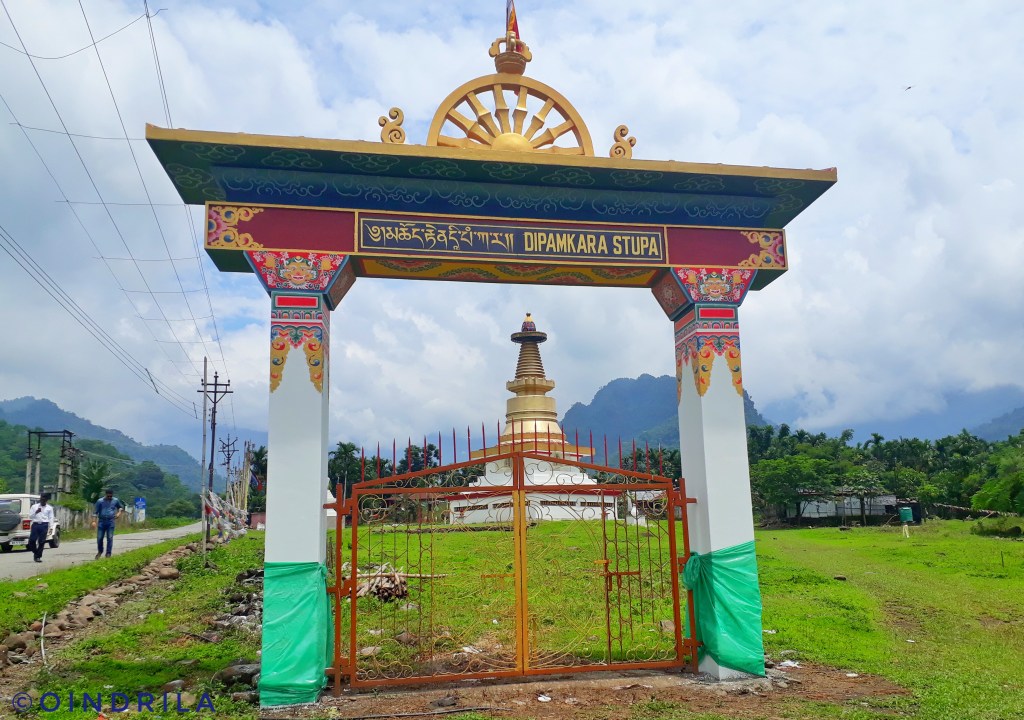
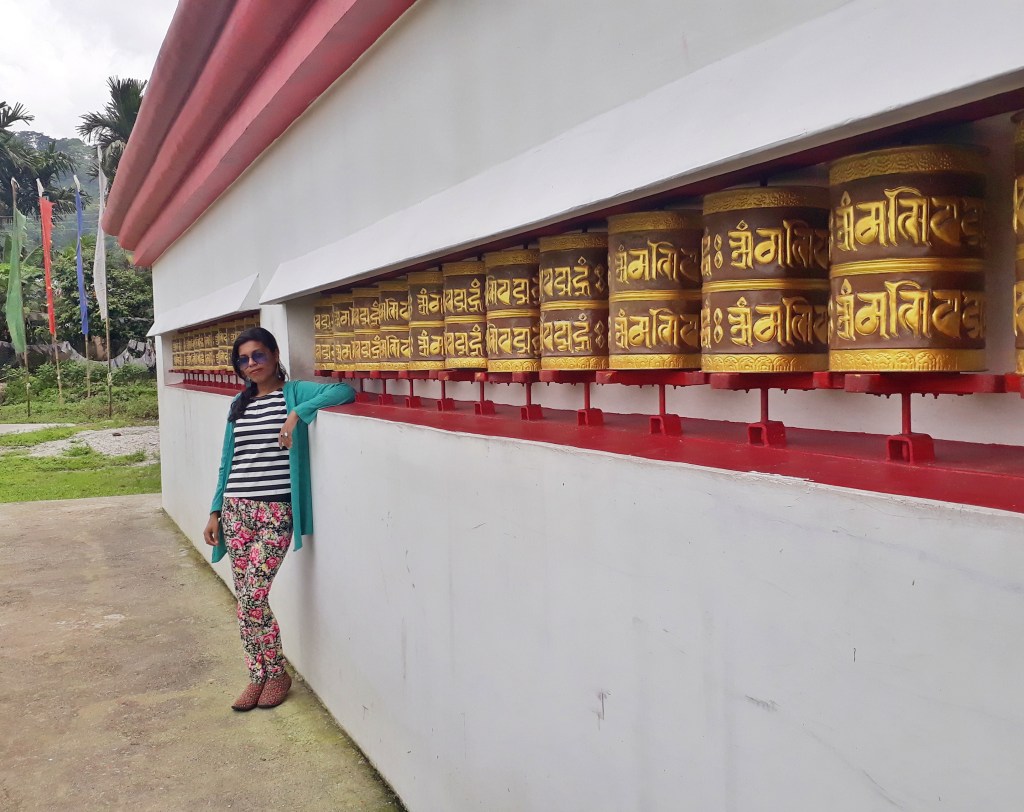
Fagu Monastery, also known as Dipamkara Stupa, is one of the most attractive spots of Gorubathan.
From here we headed towards Jhandi Eco Huts. It takes almost one hour from Gorubathan. The condition of road was too much poor, moreover the last night rain made it worse.
Jhandi Eco Hut consists of some cottages to stay with good arrangements of food.
There is a pavement that leads towards the top of the area, where a ‘Machan’ is made to enjoy the 360 degree view of the place. This view point is famous for sunset, sunrise and wide range of Kanchanjangha.
But we were not so lucky to get the view of Sleeping Buddha that day due to cloudy sky. Here we took our lunch and started for Lava.
Lava is almost 16 kms from Jhandi. Lava monastery is the main attraction of this place. The quiet and calm environment soothes the soul.
From the monastery beautiful dwellings can be observed on the slopes of the hills.
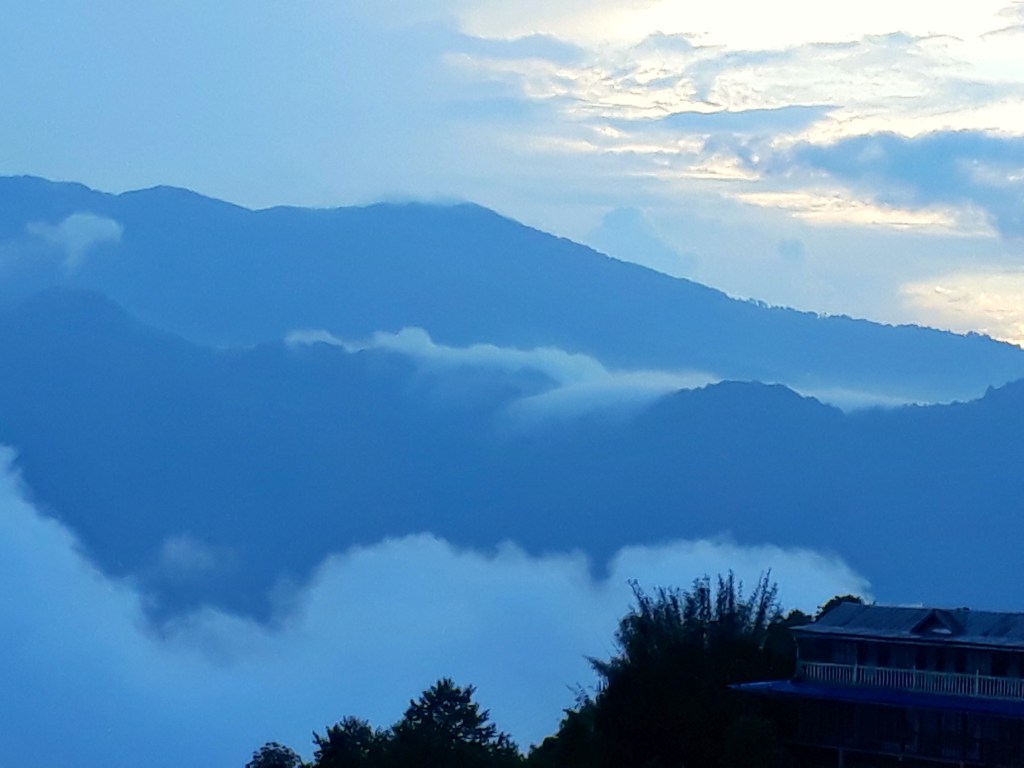
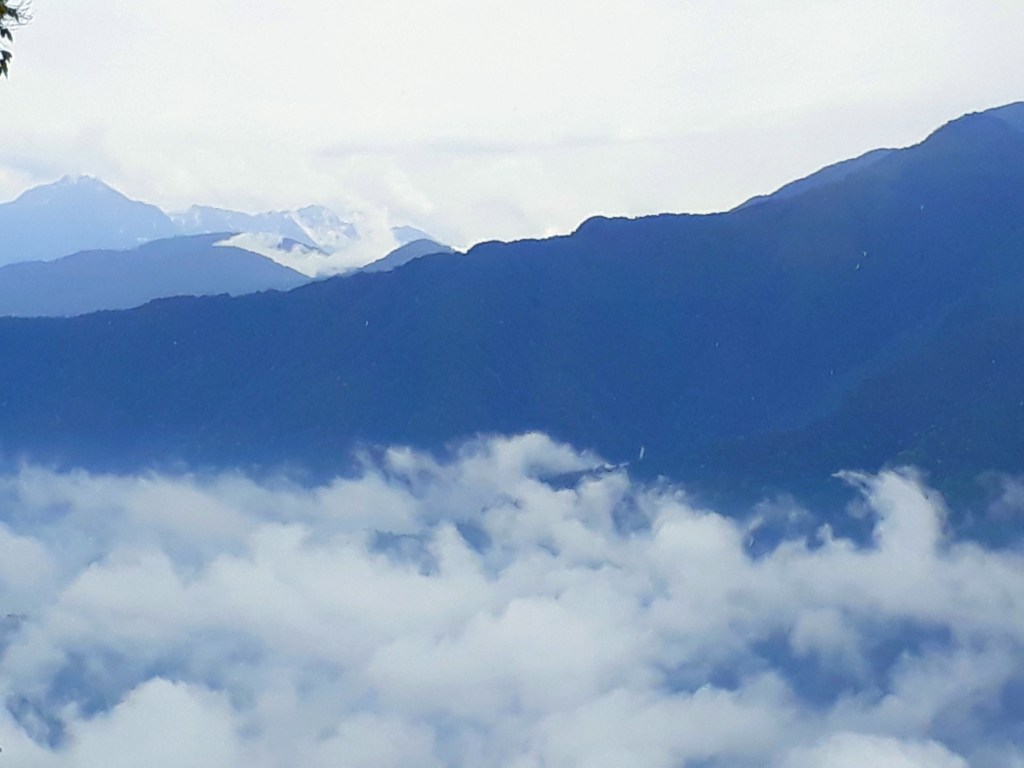
This area is higher even than Darjeeling, so it is covered with fog most of the time in a day. But when the clouds disperse, one can see the mesmerizing range of the Kanchanjungha.
At almost 3.30 p.m we started for Rishyap. This is a small village at a distance of 10-12 kms from Lava.
The name “Rishyap” stands for “mountain peaks and forests”. The condition of the road is terrible and it becomes more horrible during the landslides in rainy season. Bolero/xylo is the only vehicle to drive through this road. The narrow road leads toward Rishyap in the middle of dense Pine forest in one side and a deep cliff on the other.
Near about 4.30 p.m we reached our hotel Sonar Bangla. This hotel offers a great view of Kanchanjungha. The rooms are big enough for three persons to stay in a double bedded room.
There is a long balcony at the backside of the hotel, from where one can enjoy the hide-and-seek of figs and clouds all the day.
After having some snacks we went for a walk to see the nearby scenic beauty. This is the highest point of the area. On one side of the narrow hilly road lays dwellings and a cliff on the other. As the slope of the road is downward, it’s easy to go down but hard to come back.
It started drizzling soon after we went for the walk, though there was no need of umbrella. There was a gentle tranquility everywhere in the surrounding area. Birds’ chirping was coming from the far.
After getting back to our room,we took a nap. We were served fresh chicken curry, roti, sabji and rice in dinner. In hill areas 10 p.m. is considered as late night. As our target was to enjoy the sunrise, we went to bed early.
Day 2:
Next morning, when the first ray of the sun was seen peeping from the clouds, we hurriedly came to the lawn to enjoy the sunrise.
This was an unforgettable experience… an amazing feeling… a different kind of adventure. Though we didn’t get the full view due to cloudy sky, it was still much precious what we got.
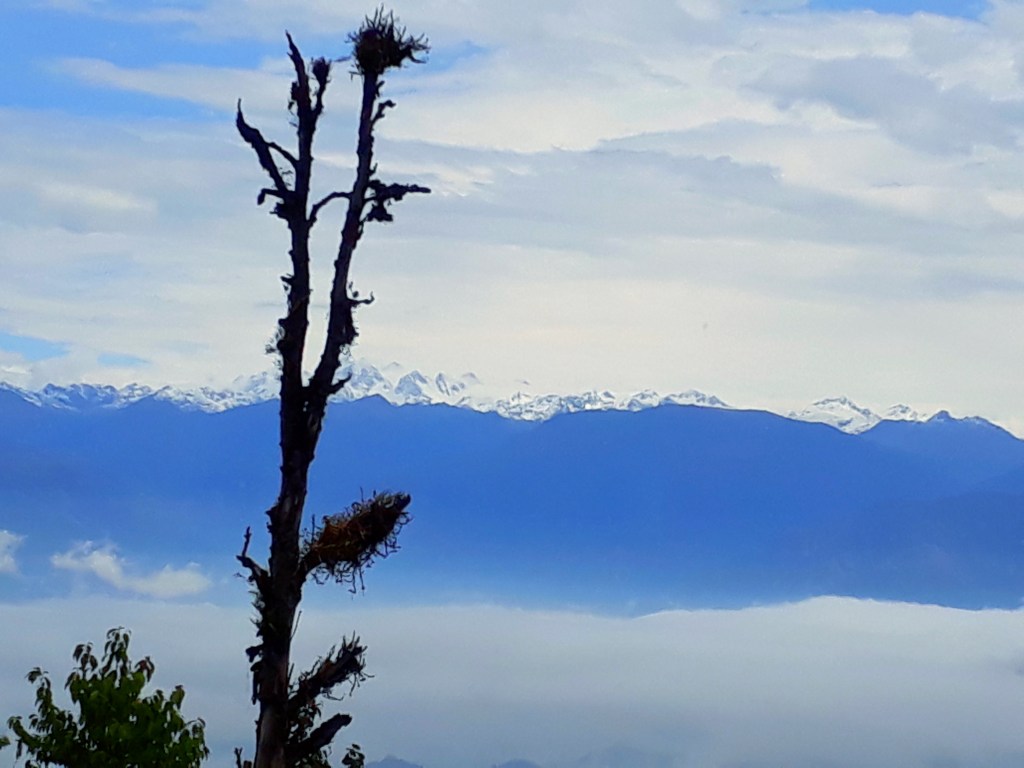
After visualising an amazing (to us) sunrise, we were waiting to see the Sleeping Buddha. It was almost more than an hour we waited to see Kanchanjungha. But here too, the clouds played the role of the villain. Whatever we got to see, we captured it by zooming in our mobile cameras. Though we didn’t get an amazing view of the Kanchanjungha, but it was still enough.
After all these, we got back to our room, had our breakfast and then took a nap.
At 09:45 a.m. we checked out from our hotel and started for Dealo.
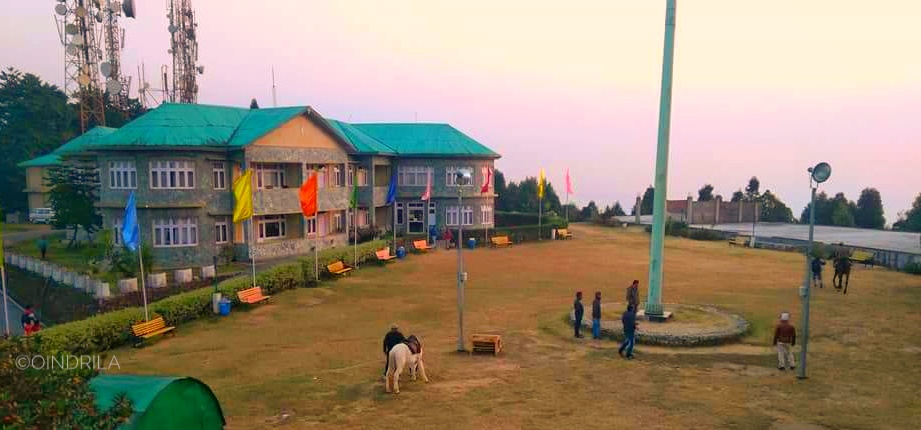
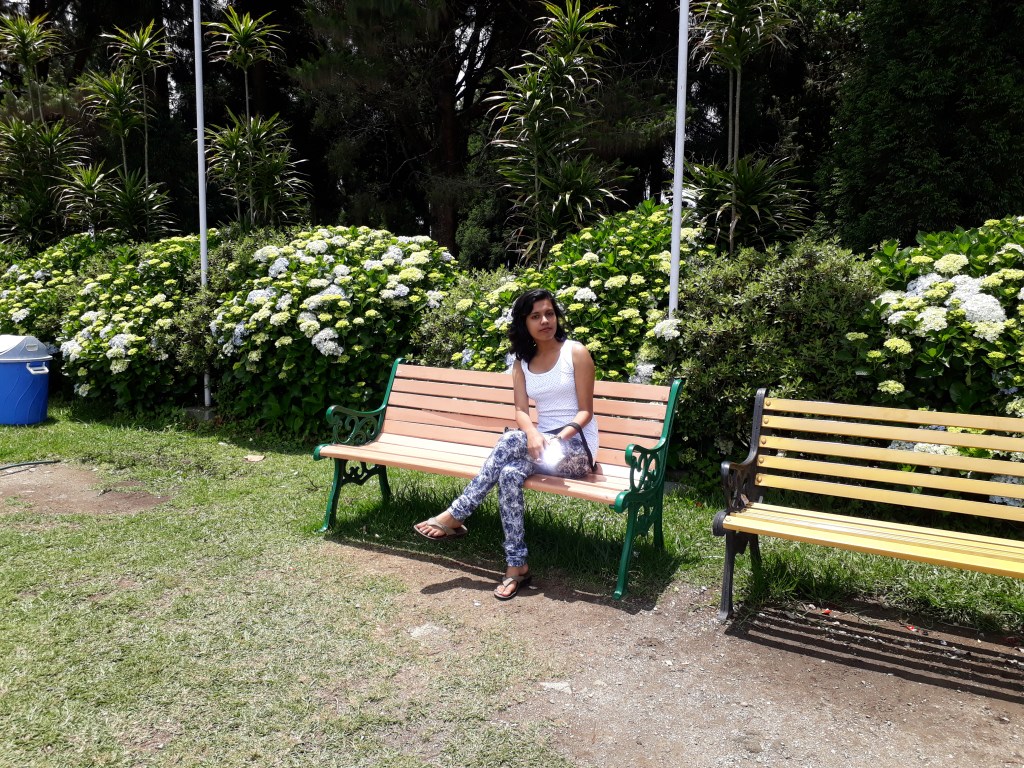
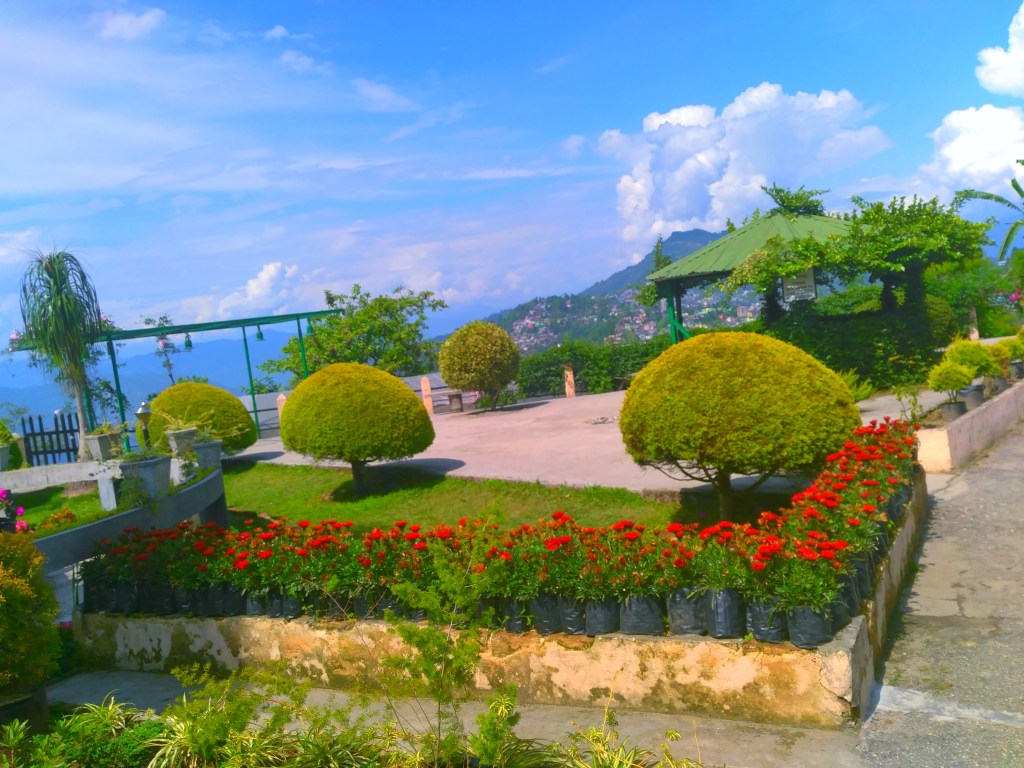
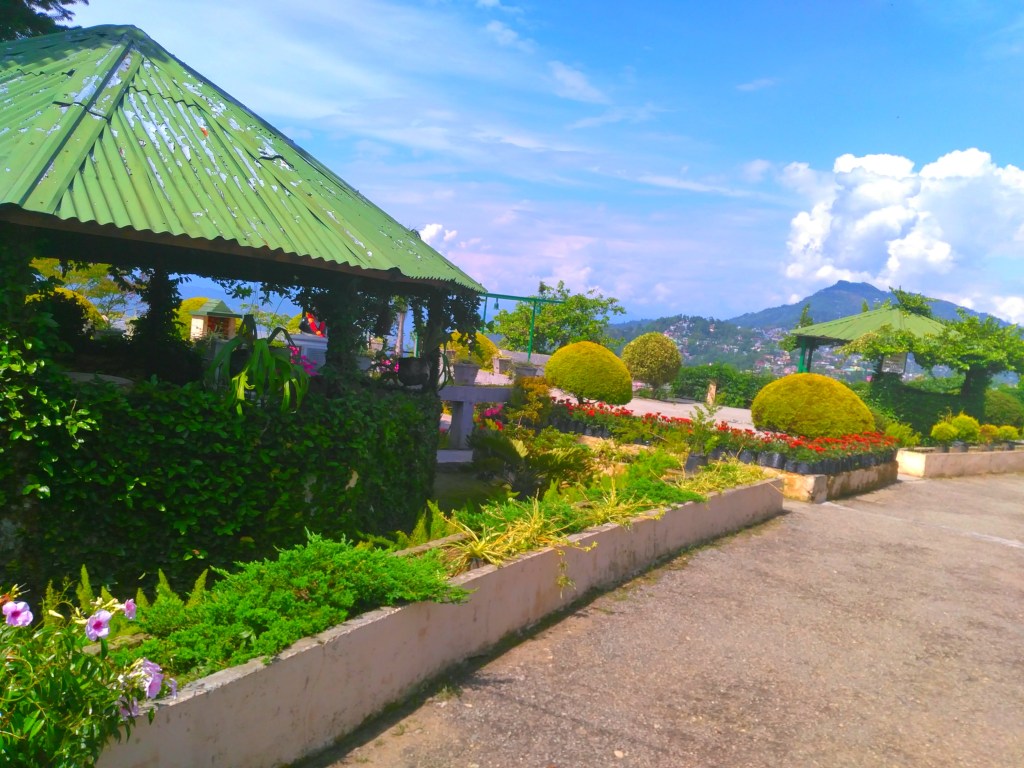
Dealo Park is a popular tourist spot of Kalimpong. It takes almost 2 hours to visit the whole area of the park. You can get an amazing view of the city Kalimpong from this park, situated at an altitude of almost 5,500ft. There are flower gardens, ranges of Pine trees and a tourist lodge of WBTDC inside the park.
before entering the park, there is an arrangement of paragliding and inside the park one can enjoy horse riding.
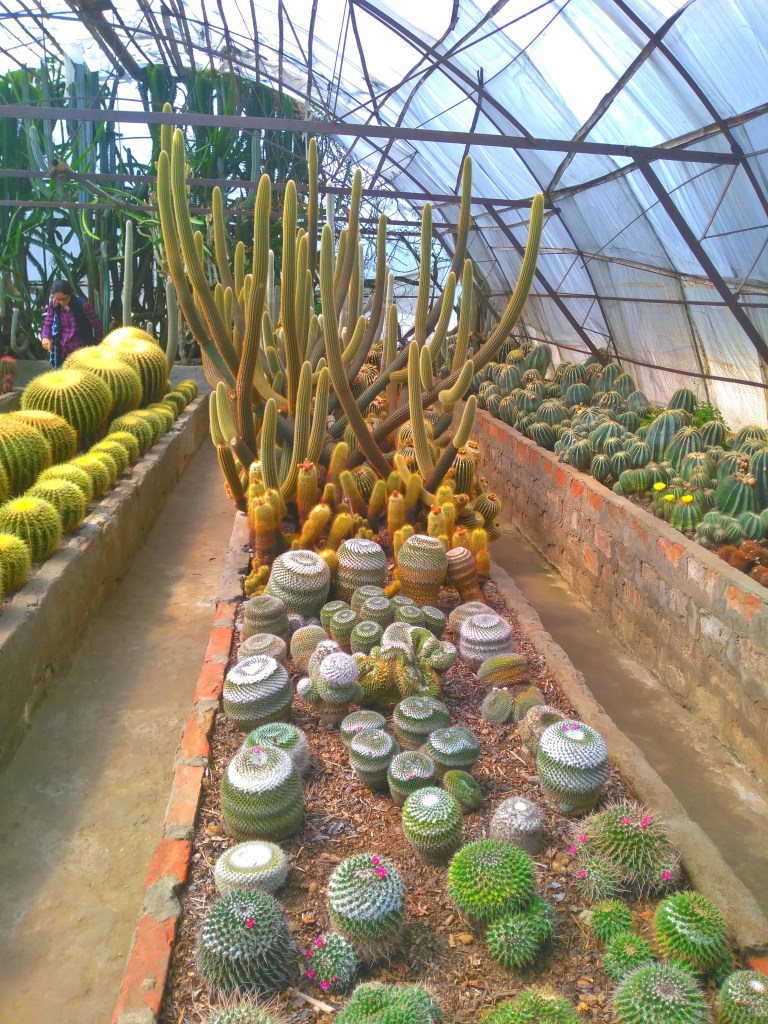
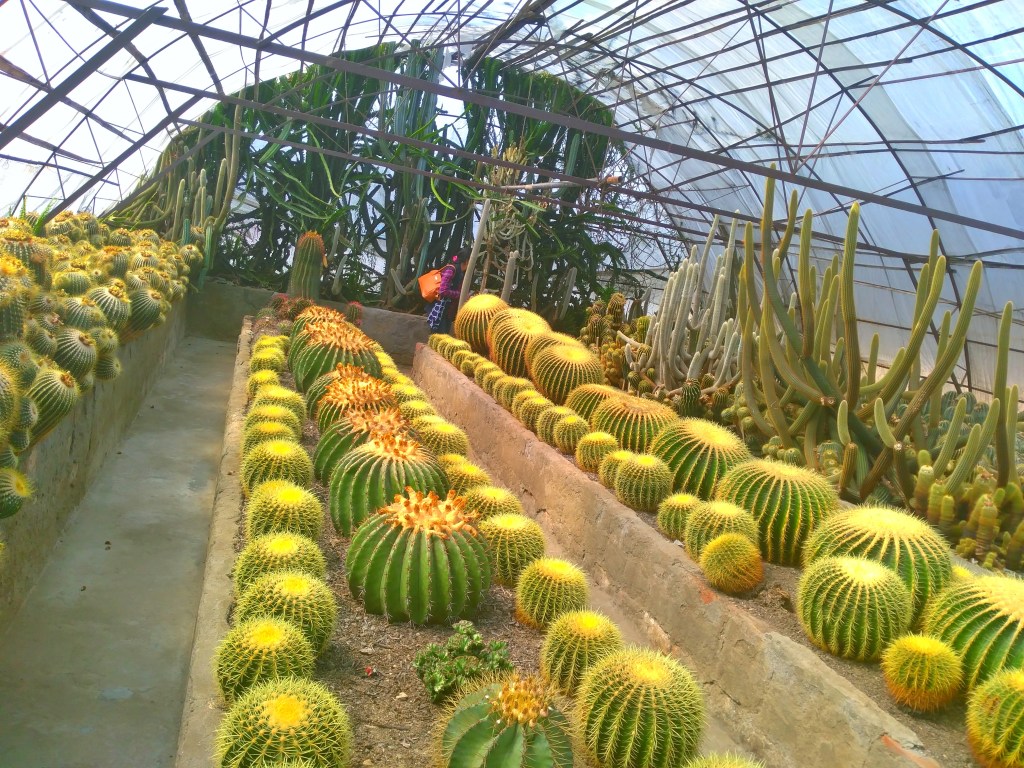
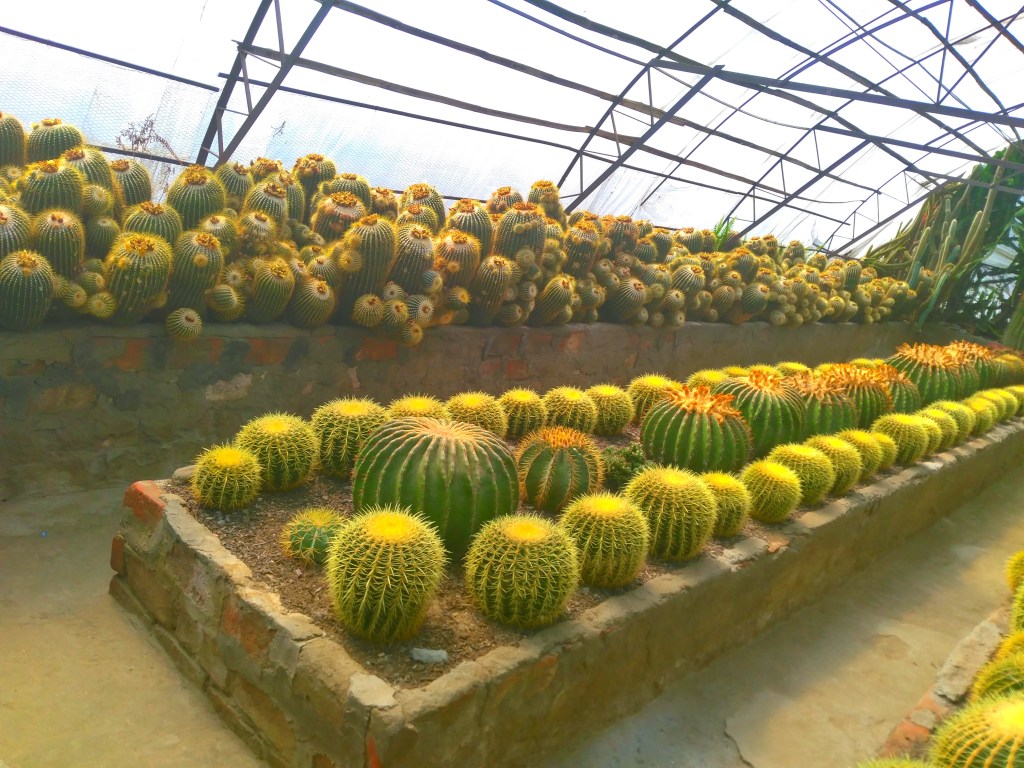
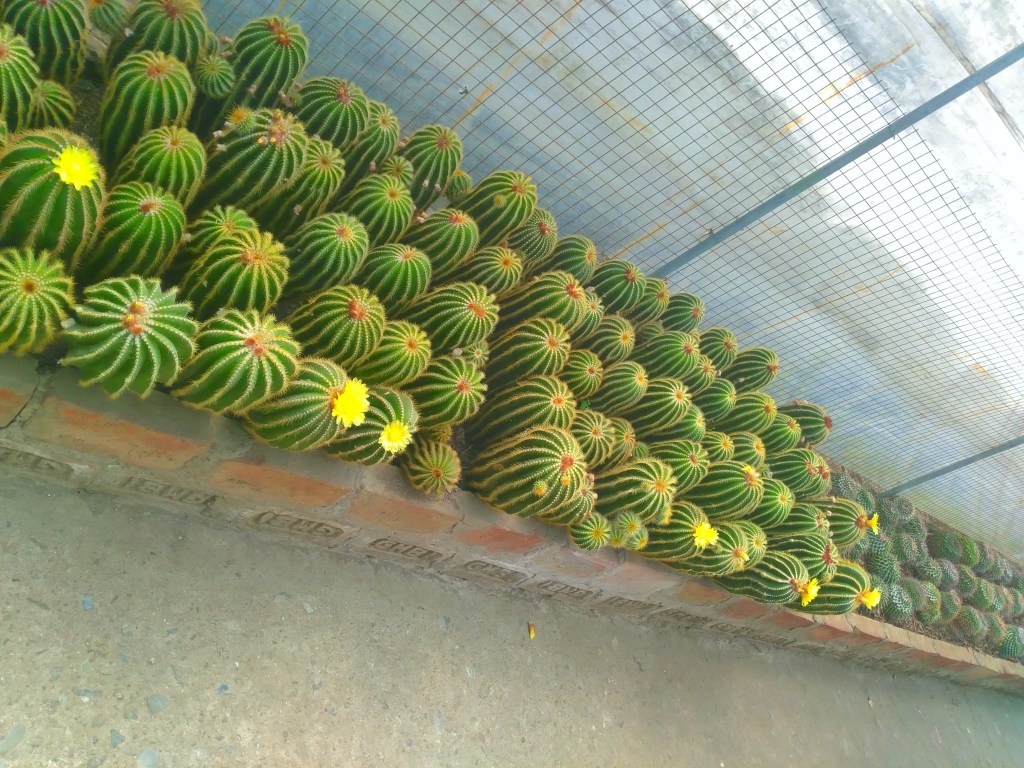
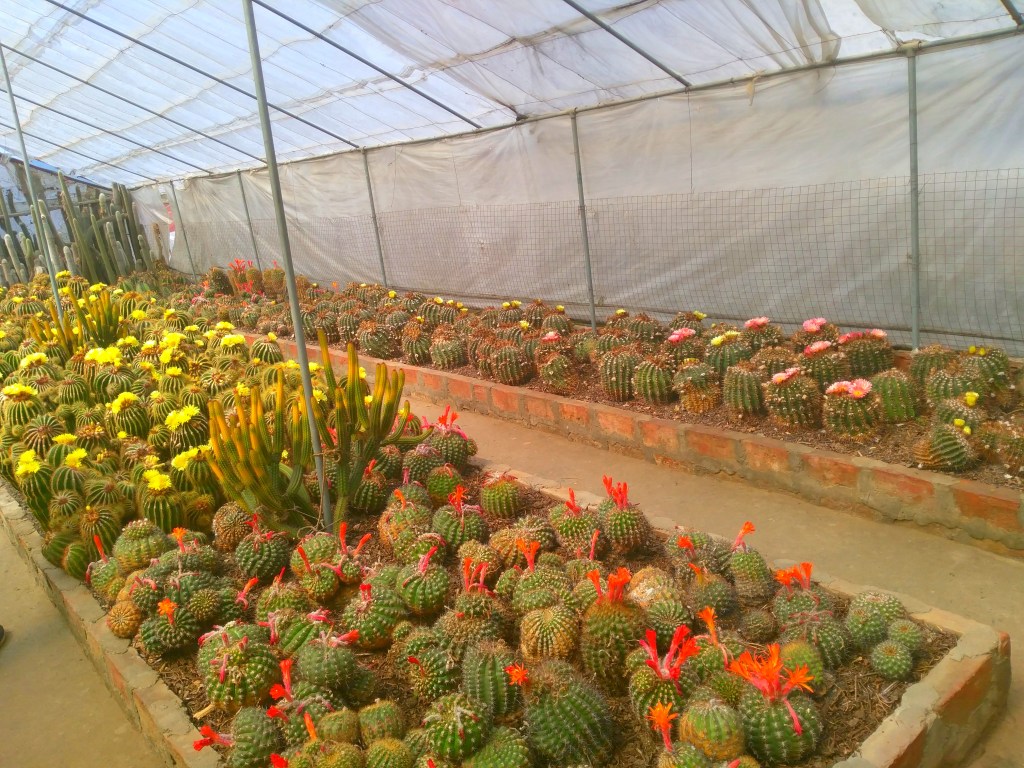
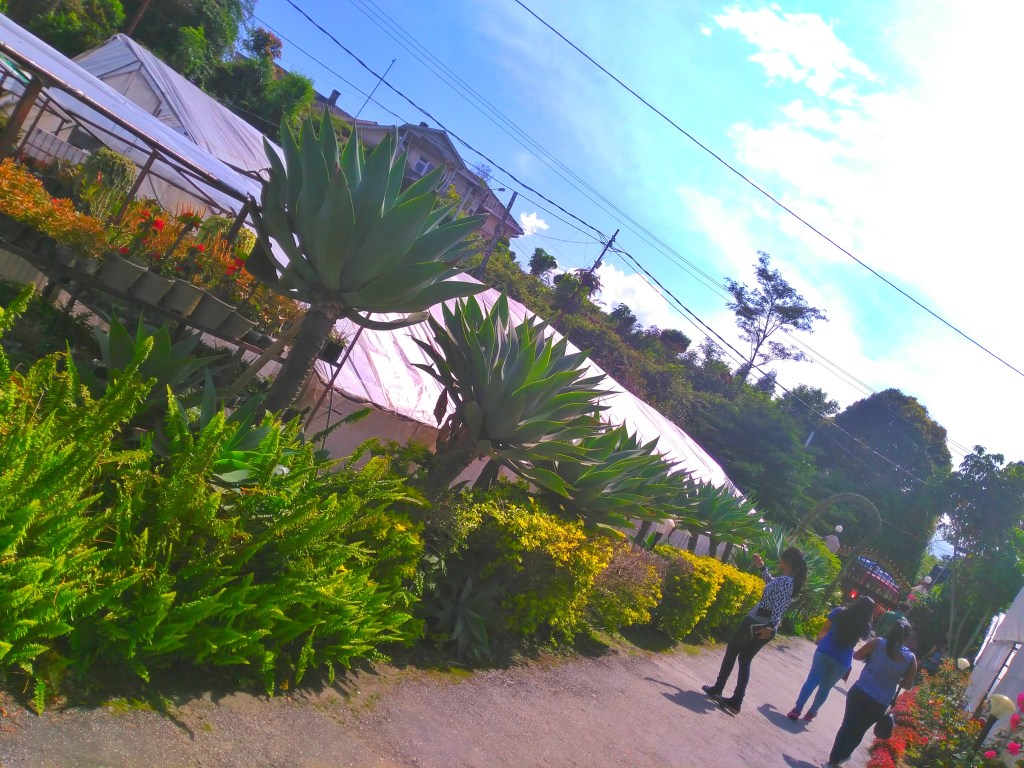
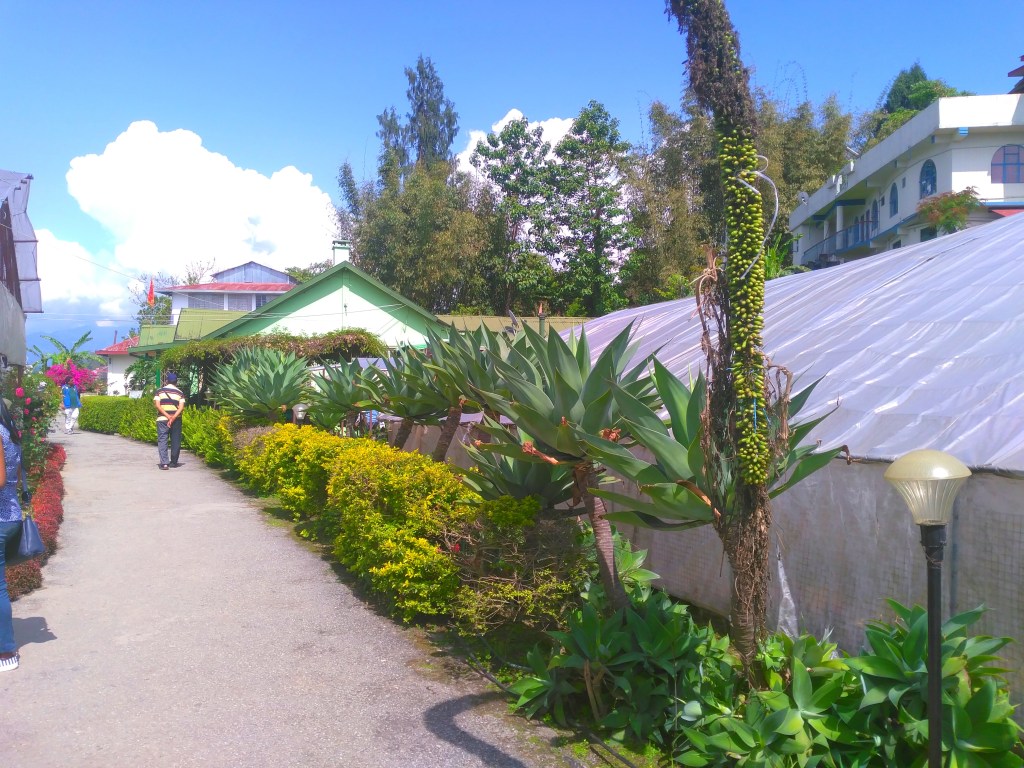
Our next destination was Pine View Nursery. At about 01:45 p.m. we reached there. This ia a well-known nursery of Kalimpong hill station known for its exotic collection of cactus.
Over 1,500 species of cactus can be found here, which made this the biggest cactus archive of Asia. There are various species of cactus under some green house sheds.
This was the last destination of our trip. After visiting this, we had our lunch in a nearby local hotel and then started for home.
Hi, I’m Oindrila. A govt. Employee by profession and a traveller by passion. I live in Jalpaiguri, a small town of West Bengal. I travel to the offbeat destinations of North Bengal and want to explore more places .

 Sonu In Hills